Showing posts with label Cost of Living Crisis. Show all posts

Saturday, 13 January 2024

Only a Just Society can Defeat Hard Right Populism


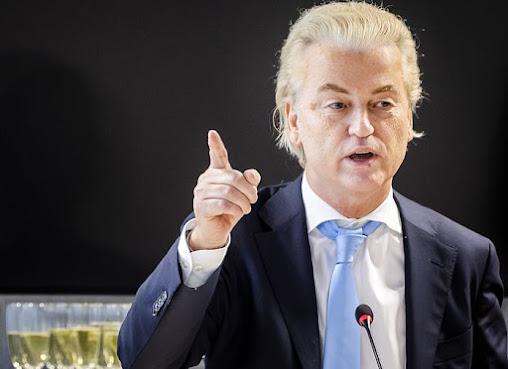
Geert Wilders following the Dutch General Election last November. Photo Credit: Remko de Waal/AFP/Getty Images.


Fellow centre-left progressives, there is a problem. Hard right populism is not going away. Across Britain, America and the European Union, in some respects, it is only getting stronger.


Last month, at a town hall event in the US state of Iowa, Donald Trump said that he would only be a dictator on “day one”. This was a chilling indication of the possible kinds of fascistic authoritarianism that we could expect should Trump return to the White House. How plausible is it to be a dictator on one day and then a wholehearted democrat the next?


In the EU, things are little better. In November last year, many were shocked to see the party of Geert Wilders come out on top in the Dutch General Election. It was the first time a far-right party had triumphed in the post-war history of the Netherlands. While in France, Marine Le Pen’s National Rally continues to be a strong force in French politics. In Germany, the far-right Alternative for Germany (AfD) party is polling in second place ahead of the Social Democrats of Chancellor Olaf Scholz. Finally, and most alarmingly of all, in Italy last Sunday, a rally of hundreds of black shirted, raised arm saluting fascists was held in Rome. Italy’s ruling Brothers of Italy party, led by Prime Minister Giorgia Meloni, is itself a descendant of Italy’s post-war neo-fascist movement.


What about here in Britain? Surely, Brexit must have vanquished our hard right populist tendencies? Far from it. In a recent opinion poll, Reform UK (the rebranded Brexit Party) polled 11% in third place, ahead of the Liberal Democrats. As for the Conservative Party, it continues to lurch towards the hard right on everything from immigration to transgender rights. The former Tory Home Secretary, Suella Braverman is clearly positioning herself for a future leadership contest. Under her leadership, the Tories would become an unashamed party of the populist hard right (assuming they are not already).


We on the centre-left of British politics need to stop pretending that hard right populism will magically go away by itself. It won’t. If anything, it is getting stronger and more forthright on both sides of the Atlantic, not weaker. The only way to address this hard right populism is to address the social injustices, the economic hardships and the precarity that is helping to fuel it. For example, research has shown that economic inequality was a significant factor in the outcome of the 2016 Brexit Referendum.


Now is the time for a wholeheartedly progressive, even radical, position on social and economic policy. Britain needs a radical break from Thatcherism, not the continuation of an economic paradigm that has devastated whole communities. An economic paradigm that has led to many working class and lower middle class people having to live in profound economic insecurity and powerlessness. These are the perfect conditions of hardship, disillusionment and alienation from which hard right populism can grow in strength.


Ahead of the next General Election, both Labour and the Liberal Democrats need to be far bolder and more radical in their policy offerings to the public. The NHS is under severe pressure by historic standards. Poverty continues to rise. The education of children is still suffering from the impact of the pandemic. The housing crisis is continuing unabated. Tory governmental kleptocracy is rife. And Britain is woefully falling behind on meeting its climate change commitments, something that will lead to even more social injustices in the future. Put simply, things cannot go on like this.


If these issues remain unresolved, then the populist hard right will continue to thrive. The populist hard right offers simple divisive solutions to complex problems. They target immigrants, asylum seekers, trans people and other defenceless minorities, while ignoring the root causes of economic injustice and social hardship. Thatcherism has to end by being replaced by a new progressive consensus rooted in liberalism and real social democracy.


The case for introducing a Guaranteed Basic Income targeted at the poorest in-order to address poverty is overwhelming. A Guaranteed Basic Income could end structural poverty once and for all. No one should be too poor to afford to buy food or the essentials in life. It is not enough for people merely to exist; they need to thrive. Therefore, any Guaranteed Basic Income would need to rise gradually to reach the level necessary to lift people above the poverty line.


The NHS, schools, housing and local government cannot be “reformed” out of this crisis. They need a radical increase in public spending. This raises important questions about the method of raising tax revenue. We should shift the burden of taxation on to taxing asset-based wealth by introducing both a land value tax and a mansion tax, while increasing capital gains tax.


Our workplaces are in desperate need of democratisation. We should seek to adopt a model of (German-style) co-determination that would lead to a notable proportion of a company’s board being comprised of worker representatives. This should exist in tandem with increasing the number of co-operatives and mutuals within the economy.


Finally, we on the centre-left have to acknowledge that the privatisation of rail, water and energy has failed, while private executives and elite shareholders have benefited from the profits generated. The railways should be nationalised and brought into public ownership. We should consider doing the same for energy too (at least in terms of national energy infrastructure). Whereas the regional basis of the water industry makes it a prime candidate for mutualisation. This would see the profits of the water companies shared for the benefit of consumers, while consumers would help to elect the governing boards of the water companies.


These measures are needed if we are to build an economically just society. Only a just society can hope to address hard right populism. We need to forge an alternative consensus to Thatcherism, one that is centred around liberalism and social democracy. Hard right populism will only be defeated by ending the economic and social injustices that are fuelling it. Otherwise, liberal democracy in Britain and numerous other countries shall continue to suffer.


I will leave you with the words of Franklin D Roosevelt. “True individual freedom cannot exist without economic security and independence. People who are hungry and out of a job are the stuff of which dictatorships are made.” In 2024, progressives on both sides of the Atlantic need to heed Roosevelt’s words now more than ever.

Tuesday, 28 March 2023

Why Ending Big Landlordism is the Liberal Thing to do


Housing Crisis Graphic – Credit: Leonie Woods, as used by the Financial Times


Britain’s economic model is broken. Nothing epitomises this more clearly than the housing market. For a significant number of people under the age of 40, living in rented property is a way of life. This is especially the case in Britain’s bigger cities.


Rent is the payment that tenants pay to their landlords for being able to live in the property that their landlords own. The widespread nature of landlordism in the modern British economy is the very antithesis of a commitment to widening property ownership. Our economic model has degenerated into a form of rentier capitalism, where the prospect of property ownership is becoming more and more a remote fantasy for millions of renters. Liberals need to put an end to the big landlordism that is perverting both our economy and our housing market.


The government should pass a law making it illegal for anyone to own more than two properties which they do not themselves live in. Any excess properties that someone owns, above the two unlived in properties limit, should be bought up by local councils at a fair price (minus the amount of any rent payments already extracted from the property) and turned into new council housing. We should also reform the Right to Buy making it a legal requirement that for every council house sold, a new council house must be built.


I am not going to pretend that ending big landlordism would be easy or cheap. Sadly, it will not be. Local councils will need significant additional funding from the state in order to buy up the new council housing properties from the big landlords, this is on top of over a decade of austerity whereby council budgets have been cut to the bone. However, it would enable councils to deliver more council housing to the poorest and most vulnerable, while also seeing an additional increase in the council’s revenue from the tenants of council housing. This additional council revenue could then be spent on public projects to benefit the community. Perhaps, the additional council revenue could form the basis of a national fund to redistribute the revenue, on an egalitarian basis, to poorer council areas with lower property prices.


Big landlordism is parasitical and monopolistic in its nature. It may well lie at the heart of rentier capitalism, but it corrupts and distorts the operation of a true capitalist free market. There is nothing wrong with people being able to buy and own the homes that they live in. There is everything wrong with a greedy landlord owning multiple properties and being able to sustain a life of luxury solely by extracting rent income from other people. There is nothing more anti-capitalist in truth, than being able to live solely on unearned rent income. Rent income should be used only to supplement an average lifestyle for the landlord, it should not be used to entirely fund a lifestyle of opulence and extravagance.


A policy to end big landlordism would lead to a truly competitive housing market. Big landlordism acts, as any private monopoly does within an economy, to prevent effective competition, while forcing tenants to pay the rent they set, regardless of whether the rent rate is fair or not. Whereas local councils are motivated to address the needs and concerns of their residents, the big landlords are primarily concerned with profit maximisation and the expansion of their property portfolios. In addition, councils can be held to account at the ballot box and their tenants would have the right to buy their properties, so long as the council replaces them like for like.


With big landlordism prevented, landlords would no longer be able to dominate entire sections of communities. The landlords that remain would have to offer fairer rents in order to attract tenants in what would be a fairer, more equal, competitive housing market. The policy of preventing people from owning more than two properties that they do not live in would also end egregious property speculation. This has seen private property owners buy up multiple properties only in order to increase their own personal wealth assets. This in turn, increases the property prices of other properties in the neighbourhood and thus, makes those properties more unaffordable for poorer and first-time buyers.


Big landlordism is a barrier to the creation of an egalitarian capitalist economy or what James Meade and John Rawls called a property-owning democracy. It is the barrier to the creation of an economy based on radical social liberal principles. Liberals, even those classical and economic liberals that value competitive free markets, should oppose the predominance of big landlordism and rentier capitalism within our contemporary economy.


The end of greedy and monopolistic big landlordism would represent a great step on the road towards the establishment of a true property-owning democracy. It would represent a great step towards an egalitarian capitalism. But most of all, it would help to deliver social justice for those most in need of council housing, especially for the poorest and most vulnerable members of our society.

Friday, 2 September 2022

An Emergency 10 Point Action Plan to Alleviate the Cost of Living Crisis

(Photo Credit: Fuel Poverty Action)


At the start of next week, Britain will have a new Prime Minister, most likely Liz Truss. A Truss government is likely to be the most right-wing government in decades, combining a dogmatic commitment to Thatcherite economics with a nationalist emphasis on the culture wars. But regardless, Britain faces the biggest cost of living crisis since at least the 1970s. We are witnessing two lost decades of living standard growth combined with inflation that could reach 22%.


At the start of next month, the average energy bill will rise by 80%. Millions of people, potentially tens of millions, are facing the very real prospect of fuel poverty this autumn and winter. Regardless of the neoliberal dogma of the new Conservative government, decisive state action is required to mitigate this cost of living crisis.


Here, I outline a 10 point action plan of emergency policies that the new Prime Minister needs to enact in the coming weeks in order to alleviate the impact of the cost of living crisis.


1. Freeze the Energy Price Cap

If the government goes ahead with the planned rise of the Energy Price Cap at the start of October, millions will be pushed into fuel poverty. Initially the Liberal Democrats, and now Labour too, have called for October’s rise in the Energy Price Cap to be scrapped. This should be financed by a new windfall tax on the profits of the big oil and gas companies. If the cap is allowed to rise, it will cause unprecedented social injustice and social hardship. This must be prevented. Freezing the rise in the Energy Price Cap would also have another beneficial side-effect, according to Labour, it would reduce inflation by 4%.


2. Extend the Energy Price Cap to all Households

Remarkably, not all households are protected by the Energy Price Cap. Housing association properties with communal heating are not covered by the cap. Many such properties are used to house elderly, vulnerable and disabled people. They are also the people who most require to heat their homes. The Energy Price Cap must be extended to all properties, especially all housing association properties and properties with communal heating.


3. Extend the Energy Price Cap to Small and Medium-Sized Businesses

Pubs have recently warned that they risk going out of business without further protection from the government. The same will be true for countless small businesses across the country. If the Energy Price Cap is not extended to all small and medium-sized businesses, then the cost of living crisis will rapidly become an economic crisis as thousands of businesses face going to the wall and going bust. The Energy Price Cap must therefore immediately be extended to cover all small and medium-sized businesses.


4. Extend the Energy Price Cap to Schools

We cannot allow schoolchildren to go cold this winter. Especially as school budgets are already highly stretched, as schools struggle to catch up from the impact of the pandemic. Having a warm and well-lit classroom is essential for the learning outcomes of schoolchildren. Anything that prevents schools from using energy this autumn and winter will have in adverse impact on children’s education. The Energy Price Cap must be extended to all schools.


5. Extend the Energy Price Cap to the NHS

The NHS is already in crisis. Its budget is stretched to breaking point. The service itself is beginning to become dysfunctional as waiting times spiral upwards. Morale in the NHS remains very low. The additional energy costs will stretch the NHS even further. This cannot be allowed to happen. The Energy Price Cap must be extended to cover the entirety of the NHS and the social care sector.


6. Rollout Mass Home Insulation

The climate emergency does not stop just because we are having a cost of living crisis. However, some green policies can help to address both. The government needs to urgently roll out the mass insulation of homes across the country. This would reduce individual households’ reliance on energy as they would be able to keep more of the heat they produce in their homes. This would both reduce carbon emissions and lead to lower energy bills.


7. Double the Household Support Fund

The Household Support Fund is an emergency fund delivered by local councils. The funding is used to help people struggling to afford food and to pay their energy bills. It targets the poorest and most vulnerable. Following calls from the Co-operative Party, the state must at least double the Household Support Fund in order to double the help for the people at the sharp end of the cost of living crisis.


8. Introduce a Weekly £30 Uplift to Universal Credit

During the pandemic, the government introduced a weekly £20 uplift for everyone in receipt of Universal Credit. In a subsequent shameful move, the government has since cut the £20 uplift. In order to give additional support for claimants receiving Universal Credit, a new £30 a week uplift needs to be introduced. The slightly higher amount is a reflection on rising prices and the rising cost of living.


9. Extend Free School Meals to all the Poorest Children

We cannot allow children to go hungry this autumn and winter. That is why free school meals must be extended to all the children of families where at least one parent or guardian is in receipt of Universal Credit. The Liberal Democrats in the House of Lords attempted to bring in this change, however the proposed amendment was opposed by the Conservatives, with most of Labour abstaining. This change must now happen. All of the poorest schoolchildren must receive free school meals.


10. Give all Adults a £500 Social Dividend Payment

In order to address the cost of living crisis, people need more money. On top of other measures already pledged by the government, the government must give every adult in the country a one-off social dividend payment of £500. A similar thing happened in America during the pandemic, when individuals were given up to $1,200. To ensure the maximum fairness of the policy, the dividend payment should be subject to income tax, meaning that those on higher incomes will have a proportion of their social dividend taxed back. This also makes the policy more affordable. A one-off £500 social dividend payment would be a vital lifeline for tens of millions across the country.

Monday, 15 August 2022

Privatisation Isn’t Working

(Photo credit: The Times/News Group Newspapers)


Privatisation has become the epitome of the neoliberal policy paradigm. It has become synonymous with Thatcherism in the United Kingdom. Successive Conservative, Labour and coalition governments have preserved the consensus on privatisation, since the initial raft of privatisations of the government of Margaret Thatcher in the 1980s.


Privatisation is when the ownership of a company or industry passes into the hands of private shareholders and private managers. It contrasts with nationalisation, when a company or industry is publicly owned by the state, and mutualisation, when a company or industry is owned by its stakeholders and/or workers. Over the past four decades, privatisation has been applied to the energy industry (most notably British Gas and its “if you see Sid tell him” share sale campaign), the water industry, British Rail, Royal Mail, telecommunications (most notably BT), aviation and the vast majority of building societies. Even services within the NHS have been outsourced to private companies.


Not all these examples of privatisation have been a disaster, some have been very successful. The privatisation of telecommunications and aviation have proven to be a roaring success with a truly competitive market able to function to provide genuine choice for customers. However, these examples are more the exception, than the rule.


As Britain teeters on the edge of the social catastrophe caused by the huge looming cost of living crisis, senior politicians are starting to question the sanctity of privatised industries. While public support for public ownership is high. In this article, I shall briefly discuss how progressives ought to address the privatisation of energy, the railways and water.


Energy


No privatised industry is coming into as much scrutiny in contemporary British politics as the privatised energy industry. On 26th August, the government will set the level of the energy price cap. It is unanimously expected to rise considerably. British consumers have already seen their gas and electricity bills skyrocket, and in the coming months they are due to hit unprecedented levels. Upwards of 10 million British citizens face being pushed into fuel poverty. Britain faces the biggest social crisis since the 1970s and perhaps even the 1930s. While the big energy companies make record profits.


How ought politicians to respond to this almighty social crisis on the horizon? The New Economics Foundation supports the introduction of a much higher windfall tax set at 45% of the profits of the oil and gas companies. The Liberal Democrats, and now Labour, have called for October’s energy price cap rise to be scrapped. While the Green Party has called for a super tax to be placed on the “dirty profits” of the big oil and gas companies to pay for the mass insulation of people’s homes. In addition, the Co-operative Party has called for the Household Support Fund to at least be doubled. All of which are great immediate policy solutions. All of which the government should immediately act upon.


But what should progressives do in relation to the ownership model of the energy industry? Echoing Gordon Brown’s recent calls, any energy companies which are unable or unwilling to lower energy prices for consumers should be taken into public ownership. Any energy companies taken back into public ownership, should only be returned to the private sector if a truly competitive energy market is able to function. However, if an effective competitive market is not able to function in gas and electricity, and there is reason to suspect this, then the state should reserve the ultimate right to transfer all the privatised energy companies into public ownership. This should follow similar lines to EDF and the French Government.


It also must be asked whether the privatised energy companies are capable of meeting Britain’s climate change commitments. As the real-world impacts of climate change are being felt, can Britain rely on an energy sector that is still overly dependent on the high profits that come from fossil fuel emissions? The very emissions that are destroying the environment. Any approach of environmental planning needed to mitigate climate change would struggle to be realised, if carbon hungry energy companies continue to put profits ahead of people and planet.


The privatised model of energy provision has had 40 years to prove that it can benefit customers. It has had 30 years to prove that it can go green and radically decarbonise. It has failed on both counts. It is becoming clear that the current privatised energy companies are incompatible with Britain’s net zero commitments. Climate change is already a lived reality for billions of people on planet Earth. We are feeling its effects here in Britain. The day is rapidly coming when the state will have to take urgent interventionist action as the climate emergency becomes a full-blown climate crisis.


Given the limited capacity for a genuine competitive market in energy and the increasing urgency with which Britain needs to decarbonise, not to mention the need to lower energy bills, then the nationalisation of the privatised energy companies is likely to be the only viable route to take. Environmental realism, more than socialism, will eventually result in the need for the central state to take control over the national energy supply. In this scenario, even mutualisation would not be sufficient, as the state would have to take radical economic action to address climate change.


But even if energy remains privatised for the meantime, we cannot go back to business as usual. The state should strengthen the energy regulators to address any unfair and anti-competitive practices by firms in the energy market, such as price-fixing. The government should also sponsor widespread community owned green energy cooperatives, such as community owned wind turbines and solar panels.


Finally, the age of the big oil and gas companies paying zero tax must end. We should implement a radical carbon tax on the part of the profits of the energy companies generated by carbon emissions, with the proper tax infrastructure to ensure that the carbon tax is properly collected. We should seek to emulate Sweden’s approach, which has one of the highest carbon taxes in the world. The money generated should be used to invest in state and community owned renewable energy generation.


The Railways


The railways have continually been a source of contention ever since they were privatised in the 1990s. The railways are a natural monopoly, with one section of train line franchised out to only one private company at any one time. The tickets for rail users continue to go upwards, as the standard of service on the railways remains highly varied, while the pay packets of railway executives continue to bulge.


In truth, the railways are already semi-nationalised. The operating company, Network Rail, which administers the railway infrastructure is already publicly owned. It is essentially just the rail stock itself which is privatised. This is the craziest form of privatisation imaginable. The infrastructure of a natural monopoly is nationalised, while the profits of the railways are leached off by the private sector. The risk has been nationalised, while the reward has been privatised. The privatised railways are structured as a rich rail executive’s charter. This farce has to end.


But even in regard to the rail stock, the picture is far from consistent across the whole of the UK. Essentially all of the rail stock for Scotland, Wales, Northern Ireland, Greater London and Kent are already publicly owned. Approximately half of the rail services in the North of England are already publicly owned, with a notable portion of the services in the East Midlands also nationalised. In addition, rail freight transportation is publicly owned.


The railways should be entirely and permanently nationalised and taken into public ownership. However, we should reject a statist and bureaucratic model of renationalisation. Instead, while the railways should be publicly owned, the running of the railways should be more bottom up, mutual and democratic. Rail users, rail workers and community groups which rely on the railways should have a democratic say over the management of the new British Rail. All the members of British Rail, would be entitled to a periodic dividend as profits are shared in the form of price cuts to tickets. In practice this model would work on a similar basis to that of a consumer cooperative.


Therefore, initially the railways should be nationalised and then transferred into mutual ownership, financed by the state. It is reasonable to ask why we should not initially just mutualise the railways right away. The reason is that the railway system is already semi-nationalised. It makes sense to complete the nationalisation first. Also, any new British Rail would require initial central, national coordination in the first instance, which only the state can provide.


Water


As regions of the UK head into drought, as climate change begins to have an impact on Britain’s water supply, it has to be asked whether we can still afford the privatised model of the water industry. Added to this, the water crisis has been compounded by the inefficiency of the water companies as up to a quarter of their water is lost in leaks. While water executives continue to reap huge salary rises.


Water is a near absolute natural monopoly. The majority of water users in the UK have just one water supplier. There is absolutely no viable competitive market possible when it comes to the supply of water. There are only so many reservoirs, aquifers and rivers to get water from. Water like all natural resources is limited and finite. Once again, the privatised water industry benefits the private water companies and their executives, while maladministration is rife across the privatised water network.


An alternative to the privatised model of the water industry can be seen in the corporate governance model of Welsh Water, the water company that administers almost all of the water supply in Wales. Welsh Water is structured as a mutual company on a non-for-profit basis. The profits that the company makes are reinvested into the maintenance of the Welsh water supply and into lowering the bills of water users.


The entire water industry in England should be mutualised along lines similar to that of Welsh Water. The mutualisation of water will lead to lower bills for water customers and a more efficient water service as more profits are reinvested into the maintenance of the water system. Profit sharing and not state management should be the driving feature of a model away from water privatisation. Also, the regional basis of the pre-existing English water suppliers lends itself more to mutualisation than nationalisation. Therefore, regional water non-for-profit mutual companies are more preferable than a state-centric nationalised water industry.


Can we still afford privatisation?


Privatisation was quite literally sold to the British public on the basis of creating a property-owning democracy of citizen shareholders. In practice however, privatisation has resulted not in the creation of a property-owning democracy, but in the creation of a property-owning aristocracy of wealthy corporate executives and elite shareholders. Private executives and shareholders reap the profits and dividends of the privatisation of the utilities and the railways, while customers have to contend with ever higher prices to use these essential services.


Britain’s natural wealth and profit is being squandered away by incompetent managers, corporate executives and distant wealthy shareholders. Imagine if that wealth and profit went straight to the public exchequer in order to ensure a just transition to a green future. Alternatively, imagine if that wealth and profit was shared more fairly by being reinvested into services and into lowering the bills of customers.


For too long, privatisation has been a charter for rich executives to plunder Britain’s natural asset-based wealth. This is wealth that should be going to the government and/or being reinvested to improve services and help customers. In energy, the railways and water, a natural competitive free market does not operate. The railways and water are natural monopolies, while an effective competitive market struggles to operate in energy, if it even operates at all. In such scenarios, the public are increasingly squeezed as they are made to pay ever higher prices for unsatisfactory services, as the profits generated are squirrelled away into the pockets of a private elite few.


At a time when we are facing an entrenched cost of living crisis, when the NHS and other essential public services are stretched to breaking point, as the price of everyday essentials continue to skyrocket, Britain can no longer afford to lose such essential wealth and profit into the hands of private shareholders. The age of privatisation has to end, and in its place a new age of nationalisation and mutualisation should take its place. The only question is, do Labour and the Liberal Democrats have the courage to propose a radical alternative to privatisation?


(Chart of my alternative energy, railway and water ownership models)

Friday, 12 August 2022

We Need Industrial Harmony Between Bosses and Workers


(This blog article was originally published on the blog of the Social Liberal Forum on 7th July 2022, during the latest rail strike. Please see the link to original article here.)

Recently, Britain witnessed a series of rail strikes across three alternate days leading to six days of disruption on the railways. The railway union, the RMT, have not ruled out a future series of strike action in the weeks to come. The threat of industrial action is not just limited to the railways. Nurses, teachers and barristers are also considering industrial action. Britain may well be on the verge of a summer of discontent.

This is yet another consequence of the cost of living crisis. The squeeze on living standards that is being caused by rising inflation is adding to demands from the trade unions for higher wages for their members. This comes on top of years of stagnant wage growth in the public sector stretching back to the years of austerity in the early 2010s. The cost of living crisis is nothing new, it has been a lived reality for the poorest working class communities for well over a decade. The difference now is that due to rising inflation, this crisis is gathering pace and is starting to impact upon the budgets of middle class families.

All of which has summoned memories of the 1970s. However, it is important to recognise that Britain is not going to experience the level of strife and militancy that was seen in the 1970s. In 1970 alone, 10 million working days were lost due to strike action. Today, the trade union movement is much weaker and with a much smaller membership base than was the case in the 1970s. For any capitalist economy to be fair, it requires an active trade union base. There will come times when trade unions have to collectively bargain and strike to achieve fairer pay and conditions for their members. In fact, part of the reason for the stagnant wage growth in the public sector is due to the weakness of the labour movement, not its strength.

The Conservative Party will nevertheless use this opportunity to resume its historic role as the class warriors fighting for the interests of capital against labour. The Tories have been vociferously anti-trade unionist for decades. Tory ministers will actively use the opportunity of the RMT strike to drive forward their own divisive right-wing politics in an attempt to drive a wedge between the public and the trade unions, while the Labour Party of Keir Starmer seems adrift in the face of the current industrial action, devoid of big ideas and unable to develop a compelling narrative to advance social justice and workers’ rights.

The industrial strife of the past must never return. But equally, we must recognise that the crushing victory of Thatcherism in the 1980s, along with the impact of austerity in the 2010s, has left workers powerless and with stagnant wages. Labour both appears to be unwilling and reluctant to revisit the anti-trade union laws of the past. Besides, even if it was possible to unleash trade union militancy again, this would only play into the hands of the Conservatives. The rise of Thatcherism in the 1970s was helped, in part, by the industrial unrest of the period.

The real radical response to industrial unrest is not to unleash it, but to seek to end it once and for all. Not by having a crushing victory over either capital or labour, but by forging industrial harmony between the two sides of economic life. This is the stance of social liberals. Social liberals neither except the militancy of hard-line socialists, nor the economic hardships of ruthless employers. In the historic class struggle, social liberals sought to build a bridge between bosses and workers. On the one hand, supporting social welfare, public services and rights for workers, while on the other hand valuing the contribution of ethical employers and socially responsible businesses.

Social liberals however, do not think it is sufficient just to guarantee that workers and employers exist and operate within a framework of fairness. What is needed to establish industrial harmony is for power to be shared between capital and labour and for the two to work in tandem with one another. This is epitomised by the social liberal commitment to co-determination. It is not enough just to ensure a fairer firm and a fairer set of labour relations; the whole nature and power structures of the firm and labour relations need to be radically overhauled.

Co-determination is where both workers and bosses would act as partners within the company, firm and workplace. The employees would be able to elect a works council. This would be made entirely of worker representatives and would address matters in the workplace such as, terms of employment, human resources and worker productivity. In the age of the Internet, E-democracy holds out the prospect of workers being able to participate in workplace elections across a large geographical area. Platforms such as Zoom and Microsoft Teams could enable elected members of a works council to convene with each other virtually at opposite ends of a country, or even on the other side of the planet. The capacity for virtual works councils elected via E-democracy, only strengthens the contemporary relevance and necessity for co-determination.

The members of the works council would also in turn be able to elect representatives onto the overarching company board to sit alongside traditional professional managers and senior stakeholders. It is not enough just to have a single tokenistic worker representative on a company board. Social liberals must strive for worker representation on company boards to range from 33% of the board to 50%. Such a model of co-determination as outlined here has proven to be successful in Germany, especially in post-war West Germany. It has led to higher productivity, higher worker satisfaction and personal welfare and greater ethical conduct by the company management. In time, it is also reasonable to assume that co-determination would result in fairer wage rises for workers and less need for industrial action, due to greater levels of engagement between employers and employees.

Co-determination represents a form of industrial or economic democracy. Radical liberals, such as John Stuart Mill, John Dewey and Jo Grimond were committed supporters of expanding democracy into the workplace. The social liberal commitment to co-determination should not be seen as an unpalatable compromise between capital and labour. In reality, it represents the empowerment of workers after decades of neoliberal disempowerment, demoralisation and economic hardships. Workers would be given a democratic voice and have the ability to exercise power within the workplace to the benefit of the workforce and the firm overall.

Strike action is not glorious, it is a reluctant necessary evil for every worker involved. Bulging executive pay packets in an age of food banks is not a sign of economic progress, it is a sign of fundamental hardship, even oppression within the economy. It is the job of social liberals to end all forms of hardship and oppression. It is the job of social liberals to build a new more egalitarian model of capitalism, one built on social justice and co-determination. One which ensures social welfare and public services to the least advantaged members of society, while giving all workers a democratic voice and a degree of power within their workplaces.

The strife and class warring of the past must be rejected. Economic hardship and workplace oppression severely restricts an individual’s freedom and autonomy. The time has come for co-determination. The time has come to truly empower workers in partnership with their management. The time has come to strive for industrial harmony. Let this be the mantra of social liberals in the trying economic times to come.

Tuesday, 9 August 2022

What is the Point of Starmer’s Labour?

(Photo credit: Sky News)


Britain is facing manifold social and economic crises unlike anything seen in decades. The cost of living crisis fuelled by rising inflation and years of austerity is undermining the living standards of working class and lower middle-class people. Millions are facing fuel poverty in the coming months as energy bills skyrocket. The NHS is struggling to cope and thousands lack access to an NHS dentist. The Bank of England has forecast that the country is heading into recession. Trade unions across multiple sectors of the economy are preparing for strike action as their members face real terms pay cuts in the face of high inflation levels. There is even speculation about the need for blackouts in January. All the while, the government is paralysed as the Conservatives wait to elect their new Prime Minister.


The situation facing Britain after 12 years of Tory-led government is truly dire. While Labour’s former Prime Minister Gordon Brown has warned that Britain is facing a “winter of dire poverty” and has called for Parliament to be recalled and for there to be an emergency budget. Brown gave his endorsement (along with several charities, faith groups and organisations) to a report highlighting the impact of the cost of living crisis, and called for the government to “take immediate action to bridge the shortfall [in people’s incomes] and ensure families have enough to live.” His position and the report were endorsed by Labour’s sister party, the Co-operative Party, but curiously the Labour Leadership has (at the time of writing) yet to clearly endorse it, despite it being a leading news story. Even the Liberal Democrats have called for October’s expected rise in the energy price cap to be scrapped.


Labour has so far struggled to get a handle on the many social and economic crises and Keir Starmer was forced to U-turn on his initial opposition to allowing Labour frontbenches to join picket lines. Labour under Starmer has yet to consolidate a clear political identity and narrative for itself. It lacks a core mission and its concrete policy proposals have been few and far between. It is lacking the red meat of social democracy, at a time when it is desperately needed. All of this leads to the question as to what is the point of Starmer’s Labour?


The instant answer is to replace the Conservatives as the party of government. There can be no doubt that a Keir Starmer led government would be a significant improvement on the current Tory government and the two candidates vying to replace Boris Johnson. I personally hope for a Labour-led government after the next general election, preferably with some form of power-sharing agreement with the Lib Dems and the Greens, along with a commitment to introducing proportional representation. Britain is crying out for a progressive government.


But Labour needs to be careful. This is not the 1990s. In fact, politically the 2020s is likely to be much closer to the 1970s, and perhaps even the 1930s. Although Labour can point to the recent success with the Wakefield by-election, it has yet to pull ahead considerably in front of the Conservatives in the opinion polls. Starmer is not polling leads as consistently high as Ed Miliband was a decade ago, let alone Tony Blair in the 1990s. A poll last month found that 43% of Labour supporters did not know what Keir Starmer stood for. This is a problem Labour must address urgently.


Labour needs ideas, and radical big ideas at that. Ideas that will enthuse voters. Ideas that Labour has the courage to argue for and campaign for. It was therefore disheartening to see Labour’s Shadow Chancellor, Rachel Reeves, appear to rule out a future Labour government supporting re-nationalisation. This follows Starmer’s previous rejection of universal basic income (UBI) during the pandemic.


Labour must not aim to become the last defenders of a failed consensus, bereft of ideas or a viable progressive alternative in the face of an immense crisis. This is what doomed the Labour government of Ramsay MacDonald in the late 1920s and early 1930s, as well as the Labour government of Harold Wilson and James Callaghan in the 1970s. In both instances, Labour was annihilated at the following general election and Britain had Conservative or Conservative dominated governments for over a decade.


It may sound like a contradiction, but in order to be pragmatic, Starmer’s Labour needs to be radical. There is nothing pragmatic about ruling out potential solutions to the cost of living crisis, something that public ownership or UBI could help to deliver. To rule something out based on pre-existing orthodoxy is the very nature of an ideological position. Labour must keep its policy options open. True pragmatism is not about bland banality, ruthless centrism or compromise for the sake of compromising, it is about proposing solutions to the problems of the day, often in the face of orthodox ideological certainties.


To get a flavour of what I mean, consider this quote from the Beveridge Report of the social liberal founder of the welfare state, William Beveridge; “A revolutionary moment in the world's history is a time for revolutions, not for patching”. This is a statement which is as radical as it is pragmatic. Beveridge was confronted by the giant social evils of the early 1940s, and he and his committee in the Beveridge Report of 1942, proposed a radical new model of social welfare provision in order to address them. Labour (and the Lib Dems) today, require both Beveridge’s radicalism and his willingness to disregard old certainties in the face of a historic social crisis.


So, what is the point of Starmer’s Labour? Inevitably, this shall be determined by events, most of which will be out of the Labour Party’s control. In fairness to Starmer, Britain is still more than two years away from a general election. However, it is already clear that the cost of living crisis, along with the many other crises that Britain faces, will be the defining issues in British politics for the foreseeable future. The point of Starmer’s Labour therefore will be to solve these crises.


Starmer admittedly has a very difficult political tightrope to walk. But should Starmer win power, he will face the worst inheritance of any incoming government in decades. The same was true when the government of Clement Attlee took power in 1945. In part due to the ideas of the Beveridge Report, Labour was able to establish a post-war welfare consensus which lasted until the late 1970s. Britain once again faces a “revolutionary moment” in its history. Will Labour be intellectually bankrupt and torn apart as it was in the 1930s and 1970s, or will it again summon the courage to envision a “New Jerusalem”, to cast old certainties aside and to slay society’s giant evils, as it did in the 1940s?


I very much hope for the sake of our country that it is the latter. I want to see the back of this wretched, corrupt and heartless Conservative government. But even more than that, I want to see someone in power with the courage to propose and enact solutions to the country’s many social and economic crises. It must be the point of Starmer’s Labour to do exactly that.

Only a Just Society can Defeat Hard Right Populism

Geert Wilders following the Dutch General Election last November. Photo Credit: Remko de Waal/AFP/Getty Images.     F ellow centre-lef...