Showing posts with label Neoliberalism. Show all posts

Monday, 15 August 2022

Privatisation Isn’t Working

(Photo credit: The Times/News Group Newspapers)


Privatisation has become the epitome of the neoliberal policy paradigm. It has become synonymous with Thatcherism in the United Kingdom. Successive Conservative, Labour and coalition governments have preserved the consensus on privatisation, since the initial raft of privatisations of the government of Margaret Thatcher in the 1980s.


Privatisation is when the ownership of a company or industry passes into the hands of private shareholders and private managers. It contrasts with nationalisation, when a company or industry is publicly owned by the state, and mutualisation, when a company or industry is owned by its stakeholders and/or workers. Over the past four decades, privatisation has been applied to the energy industry (most notably British Gas and its “if you see Sid tell him” share sale campaign), the water industry, British Rail, Royal Mail, telecommunications (most notably BT), aviation and the vast majority of building societies. Even services within the NHS have been outsourced to private companies.


Not all these examples of privatisation have been a disaster, some have been very successful. The privatisation of telecommunications and aviation have proven to be a roaring success with a truly competitive market able to function to provide genuine choice for customers. However, these examples are more the exception, than the rule.


As Britain teeters on the edge of the social catastrophe caused by the huge looming cost of living crisis, senior politicians are starting to question the sanctity of privatised industries. While public support for public ownership is high. In this article, I shall briefly discuss how progressives ought to address the privatisation of energy, the railways and water.


Energy


No privatised industry is coming into as much scrutiny in contemporary British politics as the privatised energy industry. On 26th August, the government will set the level of the energy price cap. It is unanimously expected to rise considerably. British consumers have already seen their gas and electricity bills skyrocket, and in the coming months they are due to hit unprecedented levels. Upwards of 10 million British citizens face being pushed into fuel poverty. Britain faces the biggest social crisis since the 1970s and perhaps even the 1930s. While the big energy companies make record profits.


How ought politicians to respond to this almighty social crisis on the horizon? The New Economics Foundation supports the introduction of a much higher windfall tax set at 45% of the profits of the oil and gas companies. The Liberal Democrats, and now Labour, have called for October’s energy price cap rise to be scrapped. While the Green Party has called for a super tax to be placed on the “dirty profits” of the big oil and gas companies to pay for the mass insulation of people’s homes. In addition, the Co-operative Party has called for the Household Support Fund to at least be doubled. All of which are great immediate policy solutions. All of which the government should immediately act upon.


But what should progressives do in relation to the ownership model of the energy industry? Echoing Gordon Brown’s recent calls, any energy companies which are unable or unwilling to lower energy prices for consumers should be taken into public ownership. Any energy companies taken back into public ownership, should only be returned to the private sector if a truly competitive energy market is able to function. However, if an effective competitive market is not able to function in gas and electricity, and there is reason to suspect this, then the state should reserve the ultimate right to transfer all the privatised energy companies into public ownership. This should follow similar lines to EDF and the French Government.


It also must be asked whether the privatised energy companies are capable of meeting Britain’s climate change commitments. As the real-world impacts of climate change are being felt, can Britain rely on an energy sector that is still overly dependent on the high profits that come from fossil fuel emissions? The very emissions that are destroying the environment. Any approach of environmental planning needed to mitigate climate change would struggle to be realised, if carbon hungry energy companies continue to put profits ahead of people and planet.


The privatised model of energy provision has had 40 years to prove that it can benefit customers. It has had 30 years to prove that it can go green and radically decarbonise. It has failed on both counts. It is becoming clear that the current privatised energy companies are incompatible with Britain’s net zero commitments. Climate change is already a lived reality for billions of people on planet Earth. We are feeling its effects here in Britain. The day is rapidly coming when the state will have to take urgent interventionist action as the climate emergency becomes a full-blown climate crisis.


Given the limited capacity for a genuine competitive market in energy and the increasing urgency with which Britain needs to decarbonise, not to mention the need to lower energy bills, then the nationalisation of the privatised energy companies is likely to be the only viable route to take. Environmental realism, more than socialism, will eventually result in the need for the central state to take control over the national energy supply. In this scenario, even mutualisation would not be sufficient, as the state would have to take radical economic action to address climate change.


But even if energy remains privatised for the meantime, we cannot go back to business as usual. The state should strengthen the energy regulators to address any unfair and anti-competitive practices by firms in the energy market, such as price-fixing. The government should also sponsor widespread community owned green energy cooperatives, such as community owned wind turbines and solar panels.


Finally, the age of the big oil and gas companies paying zero tax must end. We should implement a radical carbon tax on the part of the profits of the energy companies generated by carbon emissions, with the proper tax infrastructure to ensure that the carbon tax is properly collected. We should seek to emulate Sweden’s approach, which has one of the highest carbon taxes in the world. The money generated should be used to invest in state and community owned renewable energy generation.


The Railways


The railways have continually been a source of contention ever since they were privatised in the 1990s. The railways are a natural monopoly, with one section of train line franchised out to only one private company at any one time. The tickets for rail users continue to go upwards, as the standard of service on the railways remains highly varied, while the pay packets of railway executives continue to bulge.


In truth, the railways are already semi-nationalised. The operating company, Network Rail, which administers the railway infrastructure is already publicly owned. It is essentially just the rail stock itself which is privatised. This is the craziest form of privatisation imaginable. The infrastructure of a natural monopoly is nationalised, while the profits of the railways are leached off by the private sector. The risk has been nationalised, while the reward has been privatised. The privatised railways are structured as a rich rail executive’s charter. This farce has to end.


But even in regard to the rail stock, the picture is far from consistent across the whole of the UK. Essentially all of the rail stock for Scotland, Wales, Northern Ireland, Greater London and Kent are already publicly owned. Approximately half of the rail services in the North of England are already publicly owned, with a notable portion of the services in the East Midlands also nationalised. In addition, rail freight transportation is publicly owned.


The railways should be entirely and permanently nationalised and taken into public ownership. However, we should reject a statist and bureaucratic model of renationalisation. Instead, while the railways should be publicly owned, the running of the railways should be more bottom up, mutual and democratic. Rail users, rail workers and community groups which rely on the railways should have a democratic say over the management of the new British Rail. All the members of British Rail, would be entitled to a periodic dividend as profits are shared in the form of price cuts to tickets. In practice this model would work on a similar basis to that of a consumer cooperative.


Therefore, initially the railways should be nationalised and then transferred into mutual ownership, financed by the state. It is reasonable to ask why we should not initially just mutualise the railways right away. The reason is that the railway system is already semi-nationalised. It makes sense to complete the nationalisation first. Also, any new British Rail would require initial central, national coordination in the first instance, which only the state can provide.


Water


As regions of the UK head into drought, as climate change begins to have an impact on Britain’s water supply, it has to be asked whether we can still afford the privatised model of the water industry. Added to this, the water crisis has been compounded by the inefficiency of the water companies as up to a quarter of their water is lost in leaks. While water executives continue to reap huge salary rises.


Water is a near absolute natural monopoly. The majority of water users in the UK have just one water supplier. There is absolutely no viable competitive market possible when it comes to the supply of water. There are only so many reservoirs, aquifers and rivers to get water from. Water like all natural resources is limited and finite. Once again, the privatised water industry benefits the private water companies and their executives, while maladministration is rife across the privatised water network.


An alternative to the privatised model of the water industry can be seen in the corporate governance model of Welsh Water, the water company that administers almost all of the water supply in Wales. Welsh Water is structured as a mutual company on a non-for-profit basis. The profits that the company makes are reinvested into the maintenance of the Welsh water supply and into lowering the bills of water users.


The entire water industry in England should be mutualised along lines similar to that of Welsh Water. The mutualisation of water will lead to lower bills for water customers and a more efficient water service as more profits are reinvested into the maintenance of the water system. Profit sharing and not state management should be the driving feature of a model away from water privatisation. Also, the regional basis of the pre-existing English water suppliers lends itself more to mutualisation than nationalisation. Therefore, regional water non-for-profit mutual companies are more preferable than a state-centric nationalised water industry.


Can we still afford privatisation?


Privatisation was quite literally sold to the British public on the basis of creating a property-owning democracy of citizen shareholders. In practice however, privatisation has resulted not in the creation of a property-owning democracy, but in the creation of a property-owning aristocracy of wealthy corporate executives and elite shareholders. Private executives and shareholders reap the profits and dividends of the privatisation of the utilities and the railways, while customers have to contend with ever higher prices to use these essential services.


Britain’s natural wealth and profit is being squandered away by incompetent managers, corporate executives and distant wealthy shareholders. Imagine if that wealth and profit went straight to the public exchequer in order to ensure a just transition to a green future. Alternatively, imagine if that wealth and profit was shared more fairly by being reinvested into services and into lowering the bills of customers.


For too long, privatisation has been a charter for rich executives to plunder Britain’s natural asset-based wealth. This is wealth that should be going to the government and/or being reinvested to improve services and help customers. In energy, the railways and water, a natural competitive free market does not operate. The railways and water are natural monopolies, while an effective competitive market struggles to operate in energy, if it even operates at all. In such scenarios, the public are increasingly squeezed as they are made to pay ever higher prices for unsatisfactory services, as the profits generated are squirrelled away into the pockets of a private elite few.


At a time when we are facing an entrenched cost of living crisis, when the NHS and other essential public services are stretched to breaking point, as the price of everyday essentials continue to skyrocket, Britain can no longer afford to lose such essential wealth and profit into the hands of private shareholders. The age of privatisation has to end, and in its place a new age of nationalisation and mutualisation should take its place. The only question is, do Labour and the Liberal Democrats have the courage to propose a radical alternative to privatisation?


(Chart of my alternative energy, railway and water ownership models)

Friday, 12 August 2022

We Need Industrial Harmony Between Bosses and Workers


(This blog article was originally published on the blog of the Social Liberal Forum on 7th July 2022, during the latest rail strike. Please see the link to original article here.)

Recently, Britain witnessed a series of rail strikes across three alternate days leading to six days of disruption on the railways. The railway union, the RMT, have not ruled out a future series of strike action in the weeks to come. The threat of industrial action is not just limited to the railways. Nurses, teachers and barristers are also considering industrial action. Britain may well be on the verge of a summer of discontent.

This is yet another consequence of the cost of living crisis. The squeeze on living standards that is being caused by rising inflation is adding to demands from the trade unions for higher wages for their members. This comes on top of years of stagnant wage growth in the public sector stretching back to the years of austerity in the early 2010s. The cost of living crisis is nothing new, it has been a lived reality for the poorest working class communities for well over a decade. The difference now is that due to rising inflation, this crisis is gathering pace and is starting to impact upon the budgets of middle class families.

All of which has summoned memories of the 1970s. However, it is important to recognise that Britain is not going to experience the level of strife and militancy that was seen in the 1970s. In 1970 alone, 10 million working days were lost due to strike action. Today, the trade union movement is much weaker and with a much smaller membership base than was the case in the 1970s. For any capitalist economy to be fair, it requires an active trade union base. There will come times when trade unions have to collectively bargain and strike to achieve fairer pay and conditions for their members. In fact, part of the reason for the stagnant wage growth in the public sector is due to the weakness of the labour movement, not its strength.

The Conservative Party will nevertheless use this opportunity to resume its historic role as the class warriors fighting for the interests of capital against labour. The Tories have been vociferously anti-trade unionist for decades. Tory ministers will actively use the opportunity of the RMT strike to drive forward their own divisive right-wing politics in an attempt to drive a wedge between the public and the trade unions, while the Labour Party of Keir Starmer seems adrift in the face of the current industrial action, devoid of big ideas and unable to develop a compelling narrative to advance social justice and workers’ rights.

The industrial strife of the past must never return. But equally, we must recognise that the crushing victory of Thatcherism in the 1980s, along with the impact of austerity in the 2010s, has left workers powerless and with stagnant wages. Labour both appears to be unwilling and reluctant to revisit the anti-trade union laws of the past. Besides, even if it was possible to unleash trade union militancy again, this would only play into the hands of the Conservatives. The rise of Thatcherism in the 1970s was helped, in part, by the industrial unrest of the period.

The real radical response to industrial unrest is not to unleash it, but to seek to end it once and for all. Not by having a crushing victory over either capital or labour, but by forging industrial harmony between the two sides of economic life. This is the stance of social liberals. Social liberals neither except the militancy of hard-line socialists, nor the economic hardships of ruthless employers. In the historic class struggle, social liberals sought to build a bridge between bosses and workers. On the one hand, supporting social welfare, public services and rights for workers, while on the other hand valuing the contribution of ethical employers and socially responsible businesses.

Social liberals however, do not think it is sufficient just to guarantee that workers and employers exist and operate within a framework of fairness. What is needed to establish industrial harmony is for power to be shared between capital and labour and for the two to work in tandem with one another. This is epitomised by the social liberal commitment to co-determination. It is not enough just to ensure a fairer firm and a fairer set of labour relations; the whole nature and power structures of the firm and labour relations need to be radically overhauled.

Co-determination is where both workers and bosses would act as partners within the company, firm and workplace. The employees would be able to elect a works council. This would be made entirely of worker representatives and would address matters in the workplace such as, terms of employment, human resources and worker productivity. In the age of the Internet, E-democracy holds out the prospect of workers being able to participate in workplace elections across a large geographical area. Platforms such as Zoom and Microsoft Teams could enable elected members of a works council to convene with each other virtually at opposite ends of a country, or even on the other side of the planet. The capacity for virtual works councils elected via E-democracy, only strengthens the contemporary relevance and necessity for co-determination.

The members of the works council would also in turn be able to elect representatives onto the overarching company board to sit alongside traditional professional managers and senior stakeholders. It is not enough just to have a single tokenistic worker representative on a company board. Social liberals must strive for worker representation on company boards to range from 33% of the board to 50%. Such a model of co-determination as outlined here has proven to be successful in Germany, especially in post-war West Germany. It has led to higher productivity, higher worker satisfaction and personal welfare and greater ethical conduct by the company management. In time, it is also reasonable to assume that co-determination would result in fairer wage rises for workers and less need for industrial action, due to greater levels of engagement between employers and employees.

Co-determination represents a form of industrial or economic democracy. Radical liberals, such as John Stuart Mill, John Dewey and Jo Grimond were committed supporters of expanding democracy into the workplace. The social liberal commitment to co-determination should not be seen as an unpalatable compromise between capital and labour. In reality, it represents the empowerment of workers after decades of neoliberal disempowerment, demoralisation and economic hardships. Workers would be given a democratic voice and have the ability to exercise power within the workplace to the benefit of the workforce and the firm overall.

Strike action is not glorious, it is a reluctant necessary evil for every worker involved. Bulging executive pay packets in an age of food banks is not a sign of economic progress, it is a sign of fundamental hardship, even oppression within the economy. It is the job of social liberals to end all forms of hardship and oppression. It is the job of social liberals to build a new more egalitarian model of capitalism, one built on social justice and co-determination. One which ensures social welfare and public services to the least advantaged members of society, while giving all workers a democratic voice and a degree of power within their workplaces.

The strife and class warring of the past must be rejected. Economic hardship and workplace oppression severely restricts an individual’s freedom and autonomy. The time has come for co-determination. The time has come to truly empower workers in partnership with their management. The time has come to strive for industrial harmony. Let this be the mantra of social liberals in the trying economic times to come.

Tuesday, 3 August 2021

10 Ways for Progressives to Win Over Red Wall Voters

Since Labour lost a swathe of seats to the Conservatives at the last general election, there has been a lot of discussion about the Red Wall. The Red Wall is those Labour heartland seats in the North of England, the Midlands and North Wales with higher than average levels of deprivation and which mostly voted for Brexit in the 2016 EU Referendum. Progressives of all political outlooks are scrambling to try and win back Red Wall voters lost to the Tories since 2019. Contrary to popular belief, Labour was still the most popular party in the Red Wall at the local elections and a handful of gains were made by both the Lib Dems and the Greens in Red Wall areas. 


So, these are 10 ways for progressives to win over Red Wall voters. These are developed from both my personal insights having lived in the Red Wall seat of Blackpool South for most of my life, as well as the insights of Deborah Mattinson as outlined in her 2020 book, Beyond the Red Wall (see especially pages 234-235).


1. Take Pride in Local Identities


People in the Red Wall are proud of where they come from. They take great pride in their local communities and in their local identities. Pride of place is paramount for people within Red Wall communities. Progressives need to recognise this and embrace local identities. Also, they should not be afraid of progressive patriotism. Who cares if an odd house wants to fly an England Flag or a Union Flag? Most people in the Red Wall, do not want national flags to be shoved down their throats, but equally they are proud of their communities and their country. Progressives should avoid being dragged into the so-called "flag wars" between the hard left and the Conservatives. Equally, they should avoid the dichotomy of the citizens of nowhere versus citizens of somewhere discourse. Progressives in the Red Wall need to be citizens of everywhere, but proudly rooted in somewhere.


2. Don't be Afraid to Use the C-Word - Class


Progressives today seem too often to be afraid of their own shadows. Nowhere is this more clear than discussions around class. Communities in the Red Wall, like communities in parts of London, face structural class inequalities. Progressives need to proudly champion working class people and lower middle class people in the Red Wall. They should seek to address the inequalities of wealth and status which fuel class inequalities and be prepared to take on the vested class interests of the wealthiest in society. Class matters and structural classism has no place in a progressive society. Embrace class identities and give a voice to injustice.


3. Denounce the Injustices of Contemporary Capitalism


That brings me to the third point, that being to denounce the injustices of contemporary capitalism. Call it neoliberalism or Thatcherism, but contemporary capitalism is at the root of the injustices which Red Wall communities face. From insecure employment, to welfare cuts, to rent seeking destroying high streets, to the loss of public services, to food poverty and low wages; these injustices continue to blight Red Wall areas. They have only been amplified in recent years by austerity and the pandemic. Progressives need to call out these injustices and develop the radical policies necessary to remedy them. Progressives need to end social injustices, but first they must never tire of denouncing them as fundamentally immoral at every opportunity.


4. Address Regional Inequalities


There are structural regional inequalities of wealth and power which pervade the United Kingdom. Nowhere is this more true than in the Red Wall. Regional inequalities, like austerity, were a root cause of many people in the Red Wall voting for Brexit in 2016. Progressives need to support the radical redistribution of wealth and power to all regions of the UK. This means supporting either a regional Green New Deal or a Regional Investment Bank. The aim would be to funnel infrastructure spending to the most deprived parts of the country and with it create tens of thousands of well-paid jobs and much needed growth and development for left-behind communities. There also needs to be a structure of federalism and decentralisation to bring political power closer to the poorest communities and regions.


5. Give NHS Staff a 15% Pay Rise


While cynicism is rife in contemporary politics, there is one institution which the vast majority of the public still have faith in. That is the National Health Service. Especially following the pandemic, people recognise the great sacrifices which doctors, nurses and other NHS staff have had to make over the last 18 months. Solidarity and community are at the core of Red Wall ethics. Progressives must take this energy and champion a just pay rise for all NHS staff. This means promising to give all NHS staff a 15% pay rise. This is the debt of thanks which we owe to all those NHS workers who have been making incredible sacrifices not only to fight the pandemic but to keep everyone else safe. We owe it to them and the vast majority of people in the Red Wall would support it and be proud of it.


6. Champion Racial Justice via the England Team


Many cultural conservatives argue that communities in the Red Wall do not care about racial injustice. Actually, they care a lot about injustice, but never underestimate the importance of building bridges. That is exactly what the England team did in the Euros last month when before every game they took a knee in solidarity with the victims of racism. They spoke volumes to people across the country and believe me when I say that most people in the Red Wall would have been appalled at the racism of a small minority of England fans. Players such as Marcus Rashford and their actions both on and off the pitch has shown the importance of racial justice to millions of people across the country. Build bridges and champion racial justice.


7. Don't be Afraid to be Green


Green issues are often branded as "woke" by the cultural right. However, polling and election data evidence has shown a different picture of the Red Wall entirely. The vast majority of Red Wall residents support action to address climate change and believe that climate change is man-made. There is a growing environmental consciousness in the Red Wall and it is vital therefore that progressives develop it and champion green causes. After all, it is working class communities, such as those in the Red Wall, which will be facing the brunt of man-made climate change. There can be no social justice for the poor or the working class without climate justice.


8. Be Anti-Establishment


Don't underestimate the dissatisfaction which exists across the Red Wall towards Westminster establishment politics. This anti-establishment zeal fuelled Brexit. But there is absolutely no reason why a party on the progressive left could not harness the same anti-establishment energy. One clear way to do this is by denouncing the corruption which is present in the current British political system. Nowhere is this more clear than with the House of Lords. An anti-establishment campaign to reform and democratise the House of Lords has the potential to get great traction in the Red Wall, if progressives have the courage to rediscover their anti-establishment convictions.


9. Be Honest


As Deborah Mattinson points out in Beyond the Red Wall, people in the Red Wall appreciate honesty from politicians. What they don't like is deflection and lies. If a party is proposing a big spending policy, it is not unreasonable to explain to people how that would be paid for. Also, people would respect a politician for being honest and truthful and for discussing difficult issues, even if they may not be particularly popular issues, rather than presenting a false image or trying to deflect and gaslight voters. Honesty, trust and political reputation matters to people in the Red Wall. Beyond everything else, honesty may be the best policy.


10. Don't Believe the Lazy Cultural Conservative Stereotypes


Finally, progressives should avoid the lazy cultural conservative stereotypes which right-wing populists like to advance about Red Wall areas. Yes, the majority of the Red Wall proudly voted for Brexit, but on a range of other cultural issues, the Red Wall are no more conservative than the national average. As YouGov reported in May, "the Red Wall is no more socially conservative than Britain as a whole, and characterisation of voters in these areas as predominantly "small c" conservatives concerned about social liberalisation or culture wars is not supported by polling evidence." All the cultural conservative stereotype does is to reinforce the Tory narrative, which is largely fictitious and which undermines progressive parties. There is a growing body of young Red Wall voters who are anything but conservative. Labour, the Lib Dems and the Greens must not buy into the Tory Red Wall narrative and to do so would undermine the progressive cause. You cannot out-conservative the Conservatives and most of the Red Wall would not want progressives to try and do that either.

Monday, 25 May 2020

We need a Mont Pelerin of the Left

The neoliberal world is in turmoil. The economic ideology which has been a dominant feature of international politics for several decades faces its biggest challenge to date with the response to COVID-19. Neoliberalism in many countries, especially in the West, has reached hegemonic status and it continues to have a profound impact on developing world countries as well.

The emergence of neoliberalism onto the global stage in the 1970s and early 1980s was the result of decades of intellectual and ideological development by right-wing academics and economists. The seminal meeting in the formation of neoliberalism was the meeting at Mont Pelerin, Switzerland in 1947. This followed on from an earlier meeting at the Colloque Lippmann in Paris in 1938. Presiding over the meeting was the leading right-wing economist Friedrich von Hayek, who a few years earlier had published his most well-known work, The Road to Serfdom. Alongside Hayek were the leading neoliberals of the time including Hayek’s mentor and fellow Austrian economist Ludwig von Mises, the Chicago economist Milton Friedman and the leading Ordoliberal economist, Wilhelm Röpke. All the major schools of neoliberal thought were represented at Mont Pelerin: the Austrian School, the Chicago School and the Ordo School.

The Mont Pelerin gathering laid the foundations of the Mont Pelerin Society, along with a statement of six aims which gave an ideational basis to neoliberalism. Over the decades that followed, Hayek and Friedman worked to establish a public policy basis for what Friedman was already calling by 1951 “neo-liberalism”. The ideas of neoliberalism were disseminated by academic research institutions such as the Economics Department of the University of Chicago and leading right-wing think tanks such as the Institute of Economic Affairs (IEA) established in the United Kingdom in 1955.

What began to emerge therefore was the framework of an international ideology which has become established as neoliberal hegemony. Today that hegemony has been challenged by the global coronavirus crisis like never before, as domestic governments extensively expand their intervention in the economy to counter the public health crisis. Neoliberalism has faced substantial challenges in the past, such as the North Atlantic Financial Crisis of 2008. Back then the narrative was that neoliberalism was finished and that a return to a more statist, if not Keynesian, economic order seemed likely. This did not happen and instead a new phase of neoliberal austerity began with unprecedented cuts to social welfare and public services.

This time must be different. There can be no going back to austerity. Even leading British right-wing think tanks appear to see that the writing is on the wall for austerity. What progressives need to ensure is that a viable alternative replaces neoliberalism which places the values of social justice, the common good, ethical economics and economic democracy at its heart. To do this, there will need to be a project not too dissimilar to the one which began to forge transatlantic neoliberalism at Mont Pelerin. In the aftermath of the coronavirus crisis, there will need to be a consensus on the left as to the form an alternative to neoliberalism should take. This will inevitably include a gathering of leading progressive intellectuals. The likes of Rutger Bregman, Mariana Mazzucato, Thomas Piketty, Ha-Joon Chang, Naomi Klein, Guy Standing and Amartya Sen would seem like obvious candidates to provide the ideas to shape such an alternative.

What issues would a Mont Pelerin of the left need to resolve? Firstly, how best to deliver social justice and a radical redistribution of wealth from the richest to the poorest in society. One idea which has achieved greater prominence since the current crisis began, is that of the universal basic income (UBI). While UBI has committed supporters from the socialist left to the libertarian right (even Friedman advocated a form of it with the negative income tax), the real battleground will be around the form a UBI takes, how generous it is and how it is funded. A libertarian model of flat taxes and minimal welfare provision to deliver UBI would seem greatly unpalatable to socialists, social democrats and social liberals.

Another issue that would need to be resolved is the politics of ownership. Should key industries be nationalised and taken back into the public sector? What role should there be for employee models of ownership, profit-sharing and traditional worker cooperatives? Not to mention the reorganisation of the firm as an institution with a view to making it more democratic and accountable to both its workforce and customer base.

An overriding theme of any alternative to neoliberalism has to be a commitment to ending that other major global crisis which risks the stability of the world, the crisis of climate change. Ideas such as the Green New Deal would help to facilitate a sustainable economy with a high reliance on renewable energy sources built on solid Keynesian foundations. If the current crisis has shown anything it is that the reckless pursuit of profit and growth as being the only viable ends to the economy is hollow and even destructive. There is more to an economy than just GDP. New measurements of the economy will have to be adopted as well, perhaps those which measure levels of inequality and wellbeing.

            The international academic left will have to bring together the multiple strands of thought which it advances against neoliberalism into a single project with a multinational basis. What is needed is a new form of progressive politics for the world of the twenty-first century, just as social democracy and Keynesian social liberalism were well-placed to effectively address the socioeconomic inequalities of the post-war era. A post-Keynesian and progressive gathering similar to that at Mont Pelerin could begin to usher in an effective and viable alternative to neoliberalism. The ideas of such a programme could inform policy research in numerous academic institutions and progressive think tanks around the world with the potential to construct a new progressive hegemony. The old economic order is crumbling and must be replaced by something more progressive and egalitarian than what went before. There is no time to waste.


Bibliography

            Birch, Kean (2017) A Research Agenda for Neoliberalism. Cheltenham: Edward Elgar Publishing Limited.
Birch, Kean and Mykhnenko, Vlad (eds.) The Rise and Fall of Neoliberalism. London: Zed Books.
Friedman, Milton (1951) “Neo-liberalism and its Prospects” in Farmand, 17 February 1951, pp. 89-93: https://miltonfriedman.hoover.org/friedman_images/Collections/2016c21/Farmand_02_17_1951.pdf. Accessed: 25/05/2020.
            The Guardian – (16/05/2020) “Rightwing thinktanks call time on age of austerity”: https://www.theguardian.com/politics/2020/may/16/thatcherite-thinktanks-back-increase-public-spending-in-lockdown. Accessed: 25/05/2020.

Hayek, Friedrich von (2001) The Road to Serfdom. Abingdon: Routledge.
Held, David (2004) Global Covenant: The Social Democratic Alternative to the Washington Consensus. Cambridge: Polity Press.
Mirowski, Philip and Plehwe, Dieter (2015) The Road from Mont Pelerin: The Making of the Neoliberal Thought Collective. Cambridge, Massachusetts: Harvard University Press.
Mont Pelerin Society – “Statement of Aims”: https://www.montpelerin.org/statement-of-aims/. Accessed: 25/05/2020.
Peck, Jamie (2014) Constructions of Neoliberal Reason. Oxford: Oxford University Press.
            Steger, Manfred B. and Roy, Ravi K. (2010) Neoliberalism: A Very Short Introduction. Oxford: Oxford University Press.

Only a Just Society can Defeat Hard Right Populism

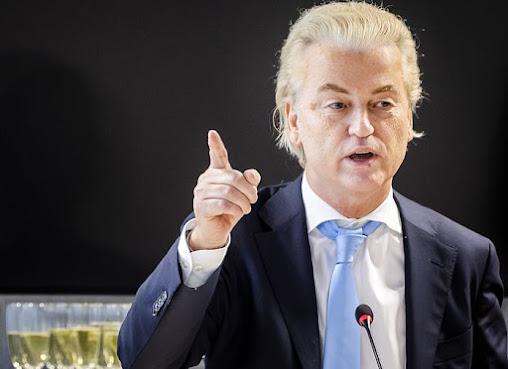
Geert Wilders following the Dutch General Election last November. Photo Credit: Remko de Waal/AFP/Getty Images.     F ellow centre-lef...