Showing posts with label Liberalism. Show all posts

Sunday, 7 May 2023

Time to Rediscover Real Republicanism

The proposed flag of an English Republic by William James Linton.


This weekend the eyes of the world are on London for the Coronation of King Charles III. The Coronation has shown that Britain as a nation excels at delivering pomp and ceremony. This is despite the fact that the ancient tradition of coronating a King, steeped in feudal symbolism and the Protestant religion, looks increasingly out of place in a modern, secular and multicultural liberal democracy. It is also an important moment to reflect upon the republican political tradition, as dozens of republican protesters have been arrested for protesting against the Coronation and for exercising their democratic rights and freedoms.


What is most striking at first glance is the great poverty of republicanism in today’s Britain. By this, I do not mean that only 27% in a survey last year would support Britain becoming a republic. I mean that real republicanism has largely been forgotten. Today, republicanism is seen by most, including by most republicans, as simply meaning support for an elected head of state. This is a great philosophical injustice. This is republicanism at its most banal, its most vapid and its most politically vacuous.


Republicanism as a political theory is not solely, or even mostly, about having an elected head of state. In fact, throughout history many republics have not had direct elections for the head of state. A contemporary example of this is that of Germany. In Germany, the President is elected by a national Federal Convention. The Convention is comprised of elected members of the German Parliament, the Bundestag, as well as elected delegates from each of the German states. Even the American President is, strictly speaking, not directly elected. Voters in America do not vote directly to elect the President, they vote to elect delegates to the Electoral College. It is the Electoral College that elects the President, not the American people directly.


For most republics throughout history, having an elected head of state has merely just been the cherry on top of the republican cake. Republicanism is about much more than the political nature of the head of state, it is about the political nature of the structure of government, its elected representatives and the citizens who vote for them. It is about the values, the principles, the attitudes and the political culture that informs a political society as a whole. Real republicanism is not just about a head of state, it is about the whole nature of government, citizenship and political society.


Republicanism as a political theory centres upon building a political society that values citizenship, virtue, democratic participation and the common good. These principles inform all the political actors (citizens, voters, activists and politicians) and all the political institutions (councils, devolved assemblies, the national parliament and the head of state) of a society. It should recognise the common citizenship of all within society, as well as believing that all citizens have a right to democratically participate in the running of the society, and that in all things, the common good must be advanced. Activists and politicians must be driven by a sense of virtue and responsibility to the people. They must recognise what is in the common good of society and always defend the principles of democratic participation for all, while respecting their political opponents and treating them with virtue.


Liberty is also of great importance to republicans. In his 1997 work Republicanism: A Theory of Freedom and Government, the Irish political philosopher Philip Pettit revived the concept of republican liberty. This being liberty as non-domination. The freedom of citizens to be free of the arbitrary interference of another to make certain decisions on their behalf. In other words, the liberty that comes from not being deprived of the agency and autonomy to make important decisions, that you are able to make for yourself, without your prior consent.


Pettit contrasts republican freedom with negative liberty, the freedom from physical restraint and coercion. However, I would argue that republican liberty is the truest expression of classical liberal negative liberty. You cannot have true freedom from coercion, unless you have liberty in the absence of domination. Not to mention, that there are aspects of republican liberty that can be identified in the works of great liberals, such as John Locke, Thomas Paine and John Stuart Mill.


Today, excellent examples of republican political societies can be seen in modern republics, such as Ireland, Germany, Portugal, Finland, Iceland and Taiwan. However, I would argue that Norway, Sweden and Denmark are more republican in terms of their political societies than the modern United States. This may seem like a controversial statement considering that Norway, Sweden and Denmark are constitutional monarchies and not republics. These Scandinavian countries with strong political traditions centred around community and social democracy are far more in keeping with the values and principles of a republican political society than the US. Especially those parts of modern America that are gripped by divisive right-wing politics, conspiracy theories, the rejection of democratic principles and the post-truth fascistic politics of Donald Trump. The modern US Republican Party is far removed from advocating for real republicanism. It truly is “Republican” in name only.


The first step towards Britain becoming a Republic is to build a republican political society. Individual republicans can start to do this right now by embodying the republican principles of public service, virtue, mutual citizenship and the common good in all of their actions. Republics are built by citizens, not just by political institutions and national titles. Regardless of Britain’s constitutional monarchy, there is nothing to stop republican principles from being advanced throughout British society and British politics. We can start to lay the foundations for a future British Republic by embodying republican principles in our personal political conduct. In time, if practiced widely enough, this would foster a political society that centres around a richly republican political culture of citizenship, virtue, democratic participation, republican freedom and the common good.


It would help in the development of a popular republican imaginary, if republicans in Britain today had a symbol behind which they could rally behind. Republican movements throughout the ages have used flags to symbolise the republican rebirth of their nations. The best example of this is the blue–white-red vertical striped French tricolour that originated in the first French Revolution of 1789. In The English Republic, published in 1851, William James Linton proposed a blue–white–green horizontal striped tricolour (see above) to be the flag of his English Republic. British republicans previously used a red-white-green horizontal tricolour from the early 19th century until the early 20th century. However, this flag is identical to the modern flag of Hungary. Therefore, it is imperative that British republicans create a modern flag to represent the republican movement and the republican political society and government they hope to build.


This Coronation weekend, we must remember that republicanism is a deep and rich political philosophy that amounts to far more than just the nature of a country’s head of state. To build a Republic without republicanism is a fruitless task. If Britain was today to start having an elected head of state, without the formation of a republican political society, it would be a “Republic” in name only. Let us begin to build a liberal democratic Commonwealth by fostering a new republican form of politics in our society. The time has come for British republicans to rediscover real republicanism.

Tuesday, 28 March 2023

Why Ending Big Landlordism is the Liberal Thing to do


Housing Crisis Graphic – Credit: Leonie Woods, as used by the Financial Times


Britain’s economic model is broken. Nothing epitomises this more clearly than the housing market. For a significant number of people under the age of 40, living in rented property is a way of life. This is especially the case in Britain’s bigger cities.


Rent is the payment that tenants pay to their landlords for being able to live in the property that their landlords own. The widespread nature of landlordism in the modern British economy is the very antithesis of a commitment to widening property ownership. Our economic model has degenerated into a form of rentier capitalism, where the prospect of property ownership is becoming more and more a remote fantasy for millions of renters. Liberals need to put an end to the big landlordism that is perverting both our economy and our housing market.


The government should pass a law making it illegal for anyone to own more than two properties which they do not themselves live in. Any excess properties that someone owns, above the two unlived in properties limit, should be bought up by local councils at a fair price (minus the amount of any rent payments already extracted from the property) and turned into new council housing. We should also reform the Right to Buy making it a legal requirement that for every council house sold, a new council house must be built.


I am not going to pretend that ending big landlordism would be easy or cheap. Sadly, it will not be. Local councils will need significant additional funding from the state in order to buy up the new council housing properties from the big landlords, this is on top of over a decade of austerity whereby council budgets have been cut to the bone. However, it would enable councils to deliver more council housing to the poorest and most vulnerable, while also seeing an additional increase in the council’s revenue from the tenants of council housing. This additional council revenue could then be spent on public projects to benefit the community. Perhaps, the additional council revenue could form the basis of a national fund to redistribute the revenue, on an egalitarian basis, to poorer council areas with lower property prices.


Big landlordism is parasitical and monopolistic in its nature. It may well lie at the heart of rentier capitalism, but it corrupts and distorts the operation of a true capitalist free market. There is nothing wrong with people being able to buy and own the homes that they live in. There is everything wrong with a greedy landlord owning multiple properties and being able to sustain a life of luxury solely by extracting rent income from other people. There is nothing more anti-capitalist in truth, than being able to live solely on unearned rent income. Rent income should be used only to supplement an average lifestyle for the landlord, it should not be used to entirely fund a lifestyle of opulence and extravagance.


A policy to end big landlordism would lead to a truly competitive housing market. Big landlordism acts, as any private monopoly does within an economy, to prevent effective competition, while forcing tenants to pay the rent they set, regardless of whether the rent rate is fair or not. Whereas local councils are motivated to address the needs and concerns of their residents, the big landlords are primarily concerned with profit maximisation and the expansion of their property portfolios. In addition, councils can be held to account at the ballot box and their tenants would have the right to buy their properties, so long as the council replaces them like for like.


With big landlordism prevented, landlords would no longer be able to dominate entire sections of communities. The landlords that remain would have to offer fairer rents in order to attract tenants in what would be a fairer, more equal, competitive housing market. The policy of preventing people from owning more than two properties that they do not live in would also end egregious property speculation. This has seen private property owners buy up multiple properties only in order to increase their own personal wealth assets. This in turn, increases the property prices of other properties in the neighbourhood and thus, makes those properties more unaffordable for poorer and first-time buyers.


Big landlordism is a barrier to the creation of an egalitarian capitalist economy or what James Meade and John Rawls called a property-owning democracy. It is the barrier to the creation of an economy based on radical social liberal principles. Liberals, even those classical and economic liberals that value competitive free markets, should oppose the predominance of big landlordism and rentier capitalism within our contemporary economy.


The end of greedy and monopolistic big landlordism would represent a great step on the road towards the establishment of a true property-owning democracy. It would represent a great step towards an egalitarian capitalism. But most of all, it would help to deliver social justice for those most in need of council housing, especially for the poorest and most vulnerable members of our society.

Saturday, 18 February 2023

A Flag for Social Liberalism


My design of a flag to represent social liberalism.


Politics is a world of colours, symbols and flags. This is certainly the case for almost all political parties in democratic countries. Political symbolism has also been associated with particular political ideologies. The red flag and the red star are universally recognised symbols associated with socialism, with the hammer and sickle and the red rose being associated with communism and social democracy respectively. Another example is the association of anarchism with the black flag and the black circled capital A.


In this blog article, I outline my proposal for a flag to represent social liberalism. The flag that I have designed has a set of balanced yellow weighing scales at the centre of a red vertical stripe that covers the left third of the flag. The remaining two-thirds of the flag is yellow. I shall first outline a broad definition of social liberalism, before explaining my rationale for my flag design in the preceding sections of my article.


What is social liberalism?

Social liberalism is a progressive political ideology that emphasises the need to have social justice in order to enhance and facilitate the rights and freedoms of the individual. It is not to be confused with cultural liberalism, as is often the case in American political discourse.


Cultural liberalism refers to the equal liberties, equal rights and equal opportunities of all individuals, regardless of their personal characteristics. In other words, it is the part of liberalism that emphasises the rights of marginalised groups, such as women’s rights, LGBT+ rights and the rights of ethnic minority groups. All liberals should ideally adhere to cultural liberalism, regardless of whether they are social liberals, economic liberals, centrist liberals or green liberals etc.


All social liberals should adhere to cultural liberalism, however what distinguishes social liberalism as a distinctive school of liberal thought is the emphasis it places on social justice. Social liberals advocate for the most equitable distribution of wealth and resources throughout society within the framework of a capitalist liberal democracy. Access to wealth and social resources (such as healthcare, education, housing, fair employment, workers’ rights and the arts and culture) is vital in enabling individuals to realise their personhood and maximise their talents and abilities to the full. We therefore might think of social liberalism as social justice liberalism, social welfare liberalism or social resources liberalism.


In the 20th century, social liberals in Britain and America advocated for the establishment of welfare systems and the advancement of workers’ rights. An excellent historic example of a social liberal government would be the American New Deal administration of President Franklin D Roosevelt in the 1930s. In more recent times, social liberals have called for urgent action to address climate change and have begun to advocate for a universal basic income.


On the traditional political spectrum, social liberalism is situated on the centre-left. This is due to its emphasis on social reform and political reform, as well as its opposition to entrenched inequalities and social hardships. In addition, it rejects right-wing politics and economics, the centrist status quo and the revolutionary anti-capitalist politics of the hard left. Political thinkers that made important contributions to social liberalism include John Stuart Mill, Harriet Taylor Mill, Thomas Hill Green, Leonard Hobhouse, John Maynard Keynes, John Rawls and Amartya Sen.


Why does social liberalism need a flag?

The purpose of a flag for social liberalism is to distinguish its identity as a political movement. it is to provide it with political symbolism to be recognised on an international scale. Social liberal parties are few and far between internationally and in many countries, they face challenges from more dominant economic liberal parties. Across continental Europe, Latin America and Australasia, social liberal parties are often overshadowed by larger economic liberal parties and a general political culture that associates liberalism with the economic right. A flag would give social liberalism a clear presence as a distinctive school of thought and activism within liberalism.


A universally recognised flag would give social liberals a clearer voice and political identity. It would give social liberals are political presence and allow them to cooperate more confidently within nations and across borders. It would also highlight the social liberal involvement in wider political and social movements, while increasing the popular political awareness of the social liberal perspective and analysis of politics and economics.


Why balanced weighing scales?

I chose the symbol of a set of evenly balanced weighing scales due to its historical association with the values of liberty, justice, fairness and equality, values that all social liberals share. In particular, it represents the liberal politics of social justice as exemplified through the works of Green, Hobhouse, Rawls and Sen. The symbol of the balanced weighing scales represents a synthesis between the ideals of liberalism and the ideals of social justice as epitomised by social liberalism.


Why use the colour yellow?

Yellow is already widely associated with liberalism. The colour features prominently in the logo of the Liberal International and is used by national liberal parties in the United Kingdom, France, Germany, Italy, Estonia, Latvia and as far afield as the Philippines. It is due to the pre-existing strong colour association between yellow and liberalism that I chose to use it to colour the majority of my flag.


Beyond this, yellow is also widely associated with the values of happiness, optimism, creativity and intellect, all of which are positive traits that any liberal society would aim to foster. Yellow is also a distinctive colour, when compared to other political movements that already have strong colour associations, such as socialism and red, ecologism and green, feminism and purple and to a large extent, conservatism and blue. The one clear drawback to using the colour yellow is that in America, it has become associated with some right-wing movements, such as the Tea Party Movement (which appropriated the yellow rattlesnake Gadsden Flag), the libertarian right and anarcho-capitalism. This is why I thought it was important not to use a single colour yellow flag, so as to distinguish it from those rightist political movements.


The particular shade of yellow I chose to use was that of the golden yellow used on the bird logo of the British Liberal Democrats. On my flag, yellow symbolises liberality, freedom and individuality. It is there to represents social liberalism’s presence within the wider international liberal movement, with its roots in the European and American political traditions.


Why use the colour red?

The second colour on my flag is the colour red. The usage of red has a long political history. Today, it is mostly associated with socialism and social democracy. However, in the 19th century, it was the colour of political radicalism and was thus appropriated by liberals, republicans and anarchists, as well as by socialists.


Prior to the rise of socialism as a democratic force, red was linked to liberalism in electoral politics, especially across the Americas. Several liberal parties in both North and South America still use the colour red to this day. This includes several social liberal parties in the region, such as the Liberal Party of Canada, the Liberal Party of Honduras, the Colombian Liberal Party and the Colorado Party in Uruguay, all these parties have their roots in the 19th century. The most obvious exception to this is the US Democratic Party, which in recent decades has been associated with the colour blue.


The exact shade of red I chose to use is the shade that is present on the logo and party flag of the Liberal Party of Honduras. I also felt it was important to include a colour from a well-established liberal party from a developing world country. Liberalism, especially social liberalism, is not just for developed comparatively wealthy Western democracies, it is for all countries regardless of their level of development. The red on my flag is used to symbolise social justice, equality and solidarity, as well as social liberalism’s roots in the radical movement of the 19th century and its presence as a progressive left movement today.


Who should use this flag?

I have specifically designed this political flag to be used by all social liberals, welfare liberals, radical liberals and left-liberals. Any and all proud centre-left liberals should feel free to appropriate this flag. It has been specifically designed to represent social liberalism, social liberal activists and supporters, it is not meant for any other purpose other than this. I do not endorse the use of my flag or its symbolism for any other purpose. I hope it will be used to identify social liberals in numerous countries, within political parties and to represent social liberalism within wider political and social movements.


May this flag become a symbol of those liberals who strive for a synthesis between individual liberty and social justice. May this yellow and red flag come to epitomise the liberal politics of social justice and the equitable distribution of wealth and resources needed for individuals to maximise their individuality.

Tuesday, 17 January 2023

Tribalism: A Fair Warning


Well, I am once again a member of the yellow political tribe, after rejoining the Liberal Democrats last month. This has led me to think a lot about the place of political parties and the impact of tribalism within democracy. In this article, I discuss tribalism and issue a warning to everyone who cares about a viable functioning liberal democracy.

I have been a member of a political party for most of my adult life. For most of that time I have been a member of the Liberal Democrats and I was briefly a member of the Green Party; it is safe to say that party affiliation has always been an important part of my political identity. As is the adversarial nature of British politics, I have occasionally fallen foul of petty tribalism myself and petty point scoring. Social media (especially Twitter) seems to exacerbate tribalist temptations. On reflection, what did my tribalism achieve? Arguably, very little, save a political ego boost. So, in part, this article is a warning to myself, as much as it is a warning to anyone else.

Liberals and progressives of all kinds have often critiqued nationalism and egoism for breeding hatred and selfishness. Tribalism is merely nationalism extrapolated to the level of political parties. It breeds mistrust, even hatred, towards other people for no other reason than that they are a member of another political tribe. The tribal mentality informs nationalism just as much as it informs party tribalism. It also informs the group egoism and privilege that informs many parties, especially parties which often exercise political power. The defence of tribe is as powerful within political discourse as it is dangerous.

Tribalism is poison in the veins of any liberal democracy. While competition between parties is vital to any multi-party democracy, tribalist mistrust and selfishness is corrosive to the political culture of any liberal democracy. If left unchecked, it can breed irreconcilable differences, differences that in time can breed extremism which can endanger a viable liberal democracy. It also breeds cynicism and mistrust towards politics and democracy amongst the general population, further making politics susceptible to forms of political extremism.

A liberal democracy can only survive as long as there is a degree of cooperation between its major political actors and a democratic consensus between the major political parties. No democracy can endure with irreconcilable differences with swathes of the population no longer trusting elected politicians or the institutions of democracy. Liberal democracy rests on its political actors being driven by the pursuit of the common good and the public interest. If they allow tribalism and the vested interest to get in the way of the common good and the public interest, it will undermine the very foundations upon which a healthy democracy rests.

In a true democracy, all citizens are political actors. Therefore, all citizens are responsible for their political conduct and are responsible for the type of democracy their conduct leads to. If you want a democracy that rests upon hate, cynicism and tribe; be hateful, cynical and tribal. If you want to democracy that is kind, cooperative and respectful; be kind, cooperative and respectful yourself. As free, rational political actors, we have political agency. We are responsible for our political actions, and we are responsible for the type of democracy that we create.

No political party has a monopoly on political wisdom or good policies. All democratic parties can learn from one another. Despite now being a Liberal Democrat again, I still admire other progressive parties. I deeply admire the Green Party (which I was briefly a member of). It has a vital role to play in combating the climate emergency and in campaigning for climate justice. Caroline Lucas continues to be my favourite non-Lib Dem MP. In Zack Polanski, the Greens have an exceptional Deputy Leader. I also admire progressive politicians across the Labour Party, as well as Labour’s sister party, the Co-operative Party. I have even admired moderate Conservatives in the past, such as Ken Clarke, Heidi Allen and Sarah Wollaston (the latter two subsequently defected to the Liberal Democrats). I take inspiration from the Attlee and Wilson Labour governments of the past, as well as from the Macmillan Conservative government.

The first past the post voting system breeds adversarial politics through its winner takes all approach to elections. This helps to ingrain a zero-sum game approach within British politics. I believe that moving to proportional representation (preferably the single transferable vote) would lead to a strengthening of British political culture and would equally create a politics that is kinder, more collegial and more respectful. PR would naturally result in parties having to work together more often. You cannot be a supporter of multi-party liberal democracy and believe in a narrow range of viable political opinion. In a true liberal democracy, political opinion should be as wide as possible, with the exception of parties and political actors that advocate hatred towards minorities or violence. No liberal democracy should ever tolerate intolerance, for that has an even bigger corrosive impact on the foundations of liberal democracy than any form of party tribalism.

British politics needs to be more pluralistic and parties need to cooperate more. This is especially the case for progressive parties. I have long advocated for Labour, the Liberal Democrats and the Greens to work together when and wherever possible. To this end, it is vital that at the next general election, all three parties campaign tactically to focus their resources on constituencies where they are best placed to unseat incumbent Tories. This must also be accompanied by the most sophisticated and wide-ranging tactical voting campaign ever seen in a British election. Tactical voting should actively be encouraged by all progressive parties due to the shortcomings of first past the post. It is also essential that all the progressive parties stand on a common platform of proportional representation, Lords reform, ending the climate emergency, opposing austerity and saving the NHS.

Let us be kinder and more respectful to our fellow democrats. While legitimate criticism and policy disagreements are essential for democratic political discourse, let us never stop trying to find the common ground between the parties. Let us strive for consensus and the common ground with the same righteous energy that we call out injustice, hatred and discrimination. Democracy ultimately rests upon a just and fair overlapping consensus between citizens and major political actors. Let’s build bridges of fairness, not walls of tribal intolerance.

In a liberal democracy, we have the freedom to speak, but that implicitly means that we have the freedom (even the responsibility) to listen to one another. In our social media age, we have mastered the prior and neglected the latter. A viable liberal democracy requires debate, but it equally requires dialogue. We must not lose sight of this. If you want a build a healthier, stronger, kinder democracy, then spend more time finding out what we have in common with each other politically, than on highlighting what we disagree on. It’s that simple!

Thursday, 15 December 2022

The Strange Rebirth of my Liberal Democrat Membership

Liberal Peer and father of the post-war welfare state, William Beveridge (left) with Liberal Party Leader, Jo Grimond (centre) and Liberal Peer, Frank Byers in 1960.

Credit: Press Association Photos  

I began 2021 as a member of the Liberal Democrats, I will end 2022 as a member of the Liberal Democrats. This statement does not do justice to the political hiatus which I chose to undertake for much of that period. I initially left the Liberal Democrats in February 2021, only to find myself rejoining now 22 months later in December 2022.


The reasons I initially chose to leave the Liberal Democrats back in February 2021 were a mixture of reasons. Firstly, the dejection I felt following Ed Davey’s victory in the leadership election of 2020. Secondly, my concern that the party was not doing enough to reach out to left behind working class communities. The final reason was the anguish I felt trying to explain the hardships caused by Coalition austerity, especially following what I have experienced here in Blackpool. All of which led to profound disillusionment for me.


So, what has changed in the last 22 months? I have been pleasantly surprised by the performance of the Liberal Democrats during that time. Not only did the party win a series of by-election victories in Chesham and Amersham, North Shropshire and Tiverton and Honiton, but the party also seems to be recovering some of its centre-left identity. From being first to propose a windfall tax on the oil and gas giants, to attempting to extend free school meals to all schoolchildren in receipt of universal credit, to opposing the Tories’ undemocratic plans for voter ID, that will impact working class people the most; the latter two Labour abstained on in the Lords. In addition, the party is committed to trans rights, rejoining the European Single Market, supporting the rights of immigrants and asylum seekers and only on Tuesday called for a ban on home repossessions and evictions over Christmas.


I also found encouragement from the annual general meeting of the Social Liberal Forum earlier in the week. At which, I successfully got a motion passed calling for a recommitment to a social liberal Keynesian approach to the economy, along with which, I also got the SLF to commit to supporting the strike action by NHS nurses. The final encouragement I got came yesterday, following a long political conversation with a good Liberal Democrat friend, who is also a student of radical social liberal politics.


To fully understand my decision to “re-rat” (as Churchill said upon rejoining the Conservative Party in 1924), it is important for me to discuss the political journey that I have been on in the last few months. In October last year, I joined the Green Party and left in the April of this year. All in all, I have a lot of time for the Green Party and recognise that it has a lot of values and policies that it shares with the Liberal Democrats. However, I did have several policy differences with the Greens, especially on HS2, nuclear power, Scottish independence and NATO. I was also shocked by how well organised a vocal transphobic minority was in the party. Finally, as a self-conscious liberal, my personal principles and values had remained solidly committed to social liberalism, a fact which came increasingly difficult to reconcile with the more dominant eco-socialist and deep ecologist factions within the party.


In short, I felt that the Green Party was not the right fit for me politically. But, I should say that I still have a few good friends in the Green Party, including former Liberal Democrats, and that I hope where possible, the two parties will work together. I have always held to a pluralist attitude to politics, and that is not going to stop now. Venomous petty tribalism breeds popular cynicism, that is dangerous and damaging for any viable liberal democracy. Parties, especially progressive parties, should be prepared to work together to advance the issues, policies and aims that they have in common.


Following my departure from the Green Party, I began to become more interested in the Co-operative Party and by extension the Labour Party of Keir Starmer. I even went to the Co-operative Party conference, held in Leeds in October this year. Remarkably, you do not need to be a Co-op Party member in order to go to their conference. I like and admire the Co-op Party and have been a supporter of the co-operative movement for much of my political life. However, it became increasingly clear to me that there would never be a place for me in a party so closely aligned to an increasingly authoritarian Labour Party. I also believe, that at a philosophical level, the co-operative economic model has often been stifled by the statism of the Labour Party. Considering that the Co-op Party does not stand independent candidates in its own right, I could never be a member of a party that required me to be silent on the unjust and authoritarian policies and attitudes of the Starmer Labour Party.


I have spent the last few months reflecting on British politics, and I do not deny that there is a certain freedom that comes from being strictly independent of any political party. However, my politics remain that of the radical social liberal tradition. This is the tradition of John Stuart Mill, Harriet Taylor, Thomas Hill Green, Leonard Hobhouse, John Dewey, William Beveridge, Jo Grimond, James Meade and Charles Kennedy. No party is truly perfect and no party has a monopoly on political wisdom. I came to the view, that the radical liberal tradition needed to be preserved and that it would be a tragedy if it was allowed to perish from British politics. Ultimately, it has become important for me to rejoin a clan of fellow social liberals. Independence is nice, political kinship is even better.


At a time when the Conservatives are presiding over a historic cost of living crisis with immense social injustice on the rise, and with Labour seemingly getting more authoritarian and small-c conservative by the day, it is impossible for me to remain independent at this moment in British political history. Given that I now realise that neither the Greens nor the Co-op Party are the right fits for me politically, rejoining the Liberal Democrats became the only realistic alternative to being independent. I am encouraged by the party’s commitment to universal basic income (UBI). Even if UBI gets slightly watered down to being a Guaranteed Minimum Income (GMI) at some point (as is being considered to my understanding), I would be more than happy to campaign for a Liberal Democrat party committed to either UBI or GMI as one of its top policies.


I regret to inform that I am not about to become an apologist for Coalition austerity, nor am I going to turn my back on forging a more pluralist politics (neither of which I did the last time I was a member of the Liberal Democrats). If anything, I have returned to the Liberal Democrats to fight for the values, principles and radical policies I believe in. It is easy to snipe from the side-lines, I have done some of that, but I have decided that the radical liberal tradition needs to be fought for and its flame rekindled. At least in my mind, I have come to realise that there is no more natural home for this tradition than within the Liberal Democrats. Where the party is lacking, I intend to fight to make it better. The first attempt to do so will probably begin very soon.


The Liberal Democrats and British liberalism more broadly have a lot to contribute to building a fairer, freer, greener and more socially just society. There needs to be a battle of ideas about the future of British politics and radical social liberalism needs to be at the heart of it. Above all, I hope that the Liberal Democrats will be true to its commitment in the preamble to the party’s constitution that “no-one shall be enslaved by poverty, ignorance or conformity”. I, along with thousands of other Liberal Democrats, will fight to ensure that this is the case.

Friday, 12 August 2022

We Need Industrial Harmony Between Bosses and Workers


(This blog article was originally published on the blog of the Social Liberal Forum on 7th July 2022, during the latest rail strike. Please see the link to original article here.)

Recently, Britain witnessed a series of rail strikes across three alternate days leading to six days of disruption on the railways. The railway union, the RMT, have not ruled out a future series of strike action in the weeks to come. The threat of industrial action is not just limited to the railways. Nurses, teachers and barristers are also considering industrial action. Britain may well be on the verge of a summer of discontent.

This is yet another consequence of the cost of living crisis. The squeeze on living standards that is being caused by rising inflation is adding to demands from the trade unions for higher wages for their members. This comes on top of years of stagnant wage growth in the public sector stretching back to the years of austerity in the early 2010s. The cost of living crisis is nothing new, it has been a lived reality for the poorest working class communities for well over a decade. The difference now is that due to rising inflation, this crisis is gathering pace and is starting to impact upon the budgets of middle class families.

All of which has summoned memories of the 1970s. However, it is important to recognise that Britain is not going to experience the level of strife and militancy that was seen in the 1970s. In 1970 alone, 10 million working days were lost due to strike action. Today, the trade union movement is much weaker and with a much smaller membership base than was the case in the 1970s. For any capitalist economy to be fair, it requires an active trade union base. There will come times when trade unions have to collectively bargain and strike to achieve fairer pay and conditions for their members. In fact, part of the reason for the stagnant wage growth in the public sector is due to the weakness of the labour movement, not its strength.

The Conservative Party will nevertheless use this opportunity to resume its historic role as the class warriors fighting for the interests of capital against labour. The Tories have been vociferously anti-trade unionist for decades. Tory ministers will actively use the opportunity of the RMT strike to drive forward their own divisive right-wing politics in an attempt to drive a wedge between the public and the trade unions, while the Labour Party of Keir Starmer seems adrift in the face of the current industrial action, devoid of big ideas and unable to develop a compelling narrative to advance social justice and workers’ rights.

The industrial strife of the past must never return. But equally, we must recognise that the crushing victory of Thatcherism in the 1980s, along with the impact of austerity in the 2010s, has left workers powerless and with stagnant wages. Labour both appears to be unwilling and reluctant to revisit the anti-trade union laws of the past. Besides, even if it was possible to unleash trade union militancy again, this would only play into the hands of the Conservatives. The rise of Thatcherism in the 1970s was helped, in part, by the industrial unrest of the period.

The real radical response to industrial unrest is not to unleash it, but to seek to end it once and for all. Not by having a crushing victory over either capital or labour, but by forging industrial harmony between the two sides of economic life. This is the stance of social liberals. Social liberals neither except the militancy of hard-line socialists, nor the economic hardships of ruthless employers. In the historic class struggle, social liberals sought to build a bridge between bosses and workers. On the one hand, supporting social welfare, public services and rights for workers, while on the other hand valuing the contribution of ethical employers and socially responsible businesses.

Social liberals however, do not think it is sufficient just to guarantee that workers and employers exist and operate within a framework of fairness. What is needed to establish industrial harmony is for power to be shared between capital and labour and for the two to work in tandem with one another. This is epitomised by the social liberal commitment to co-determination. It is not enough just to ensure a fairer firm and a fairer set of labour relations; the whole nature and power structures of the firm and labour relations need to be radically overhauled.

Co-determination is where both workers and bosses would act as partners within the company, firm and workplace. The employees would be able to elect a works council. This would be made entirely of worker representatives and would address matters in the workplace such as, terms of employment, human resources and worker productivity. In the age of the Internet, E-democracy holds out the prospect of workers being able to participate in workplace elections across a large geographical area. Platforms such as Zoom and Microsoft Teams could enable elected members of a works council to convene with each other virtually at opposite ends of a country, or even on the other side of the planet. The capacity for virtual works councils elected via E-democracy, only strengthens the contemporary relevance and necessity for co-determination.

The members of the works council would also in turn be able to elect representatives onto the overarching company board to sit alongside traditional professional managers and senior stakeholders. It is not enough just to have a single tokenistic worker representative on a company board. Social liberals must strive for worker representation on company boards to range from 33% of the board to 50%. Such a model of co-determination as outlined here has proven to be successful in Germany, especially in post-war West Germany. It has led to higher productivity, higher worker satisfaction and personal welfare and greater ethical conduct by the company management. In time, it is also reasonable to assume that co-determination would result in fairer wage rises for workers and less need for industrial action, due to greater levels of engagement between employers and employees.

Co-determination represents a form of industrial or economic democracy. Radical liberals, such as John Stuart Mill, John Dewey and Jo Grimond were committed supporters of expanding democracy into the workplace. The social liberal commitment to co-determination should not be seen as an unpalatable compromise between capital and labour. In reality, it represents the empowerment of workers after decades of neoliberal disempowerment, demoralisation and economic hardships. Workers would be given a democratic voice and have the ability to exercise power within the workplace to the benefit of the workforce and the firm overall.

Strike action is not glorious, it is a reluctant necessary evil for every worker involved. Bulging executive pay packets in an age of food banks is not a sign of economic progress, it is a sign of fundamental hardship, even oppression within the economy. It is the job of social liberals to end all forms of hardship and oppression. It is the job of social liberals to build a new more egalitarian model of capitalism, one built on social justice and co-determination. One which ensures social welfare and public services to the least advantaged members of society, while giving all workers a democratic voice and a degree of power within their workplaces.

The strife and class warring of the past must be rejected. Economic hardship and workplace oppression severely restricts an individual’s freedom and autonomy. The time has come for co-determination. The time has come to truly empower workers in partnership with their management. The time has come to strive for industrial harmony. Let this be the mantra of social liberals in the trying economic times to come.

Friday, 23 July 2021

There can be no Progressive Future without Proportional Representation

The United Kingdom is not a true democracy. While everyone over the age of 18 may have the right to vote, those votes are not of equal weight. They also only apply to the lower house of Parliament, the House of Commons. The House of Lords has not seen a single national election in its 700 year history. Alongside the necessity to deliver social justice and end the climate crisis, progressives have another great challenge, to build a British liberal democracy worthy of the name.


If you do not vote for the party that wins in your local constituency at a general election, your vote has had no impact on the final result. This means that the vote of people in marginal constituencies (assuming they vote for the parties which are in contention for the seat) carry a much larger electoral weight, than the votes of people in safe seats. Under the First Past The Post voting system, smaller parties, such as the Green Party and the Liberal Democrats are structurally disadvantaged under the system. Whereas establishment parties, such as the Conservatives, Labour and in Scotland, the Scottish National Party, hold a structural political advantage. This means that First Past The Post rarely reflects how people actually vote.


If we are to build a progressive country, we need to challenge the political establishment that allows for a corrupt voting system which effectively disenfranchises millions of people. This is a sham of democracy. It also undermines any potential for building a strong progressive consensus. First Past The Post leads to institutional conservatism as the parties which best preserve the status quo can cement their positions as parties of government, while smaller parties are unjustly denied fair representation. It also leads to tribalism between competing parties, petty point-scoring and ideological factionalism within parties. A system of Proportional Representation (PR) on the other hand would lead to the development of a more collegial, consensus-based politics.


The two best models of Proportional Representation are the Single Transferable Vote (STV) and the Additional Member System (AMS). STV is a form of Proportional Representation which supports preferential voting (the ranking of preferred candidates on the ballot paper) and would elect MPs in multi-member constituencies. This system is currently used for the devolved and local elections in Northern Ireland. It is used in the Scottish local elections and is used to elect the national Parliament of the Republic of Ireland. AMS is a hybrid voting system which combines First Past The Post constituencies with pure PR party lists. It is currently used to elect the Scottish and Welsh Parliaments, as well as the London Assembly. Internationally, it is used to elect the Federal Parliament of Germany.


However, there is one significant roadblock which prevents the establishment of a more progressive and democratic society here in the UK. That is the opposition of the Labour Party to Proportional Representation. This position is unhelpful and harms the prospects of forging bonds of solidarity between fellow progressives. It is utterly shameful for the Labour Party to prioritise its own power and privilege above the interests of the people and of democracy. The Green Party and the Liberal Democrats must never tire of denouncing Labour's shameless defence of a voting system which continually facilitates the election of single party majority Tory governments on a minority of the popular vote.


Labour is the only social democratic party in the developed world which supports First Past The Post. Labour more often than not, would rather preserve a voting system which benefits them disproportionately and allows for unfettered Tory governments, than support a voting system which would allow for fairer representation for smaller progressive parties. In this respect there is a corrupt bargain between Labour and the Conservatives to deny power and representation to the smaller parties of the progressive left. Labour must realise that the voting system is at the heart of our broken political system and the social injustices it so often creates.


How can Labour with an easy conscience support a voting system which almost entirely disenfranchises its own electorate in the rural south of England, let alone the vast majority of Scotland? If Labour is to truly live up to its principles of equality, democracy and solidarity, it must embrace Proportional Representation. Those brave electoral reformers within the Labour Party are the true custodians of Labour's principles today. Most Labour members, 83%, back Proportional Representation. It is time for Sir Keir Starmer and the Labour Leadership to follow suit.


The major progressive parties, Labour, the Liberal Democrats and Greens need to work together like never before in order to achieve electoral reform. At the very least, the progressive parties must vocally support anti-Tory tactical voting and embrace a common platform which amongst other issues would commit all the progressive parties to introducing Proportional Representation. Electoral pacts between progressive parties in a limited number of marginal Tory constituencies, should also be an option where appropriate.


There is a corruption at the heart of British politics. Its name is First Past The Post. Those parties who support this voting system do so against the real wishes of the people. Power and privilege in all its forms must be challenged. The political classes in both the Tories and Labour who continue to support this voting system must be called out for the corrupt sham of democracy which they support. The hypocrisy of so-called progressive Labour politicians who prevent Proportional Representation must be denounced.


The Greens, the Liberal Democrats and pro-PR Labour politicians must be in the vanguard of a reforming political movement to bring down the political corruption at the heart of the British establishment and to achieve real democracy. The feudalistic relic which is the House of Lords must be swept away and replaced with a democratic second chamber. The vote must be handed to all 16 and 17 year olds. But above all the life blood of our political institutional inequalities and political injustices, First Past The Post, must be abolished and replaced with a voting system worthy of the name. If you believe in democracy, support real democracy. Support Proportional Representation! Make Votes Matter!

Saturday, 23 May 2020

Remembering the Republican Liberal Political Tradition

Liberalism and Republicanism have been in the vanguard of advancing political liberty, socioeconomic justice and democracy over the last few centuries. Both philosophies are at the heart of the turbulent changes that happened in European and American nations in the seventeenth, eighteenth and nineteenth centuries. The history of liberalism stretches back to the writings of John Locke in the late seventeenth century. Although liberalism did not emerge as a self-conscious political project until the early nineteenth century, where it emerged in Spain as a political movement for radical constitutional reform during the Peninsular War. Republicanism has a much longer history stretching back as far as the Roman Republic and even further to Ancient Athens and its classical philosophers, such as Plato and Aristotle.


            Liberalism was born out of republican philosophy. The root of liberalism comes from the republican virtue of liberality (liberalitas). This was the virtue which concerned generosity (both personal and societal) and open-mindedness. The New York academic Helena Rosenblatt has charted the history of liberalism as a form of liberality in her 2018 book, The Lost History of Liberalism.


The two political philosophies have been closely linked together. Both were at the heart of the American Revolution in the eighteenth century and the European Spring of 1848. It is in the French Revolution that we can see the biggest contrast between the two philosophies. Initially, the French Revolution was very much a liberal revolution committed to liberty, individual rights, constitutionalism, government by consent and limited monarchy. The liberal revolution of 1789 gradually becomes more republican with France being declared a Republic in 1792. France’s republican experiment becomes most radical in 1793 with the rise of Maximilian Robespierre and the clearly illiberal ‘Reign of Terror’.


In recent decades within the academy, both liberalism and republicanism have seen a revival in the western political philosophical tradition. Starting with the publication of John Rawls’ A Theory of Justice in 1971 which gave a philosophical contractarian basis to American social liberalism, which itself has been built on by successive authors most notably by Amartya Sen in The Idea of Justice. Republicanism has also witnessed a substantial revival with the neo-republicanism of Philip Pettit. Pettit’s Republicanism (published in 1997) successfully re-conceptualises freedom as republican liberty, that is liberty as non-domination.


            Looking back at history it is often difficult to distinguish two distinct political projects. Many leading liberals were also republicans and vice versa. Thomas Jefferson was a liberal political thinker who was a founding father of the American Republic. Additionally, Thomas Paine was a radical republican writer, who also drew heavily on the classical liberal political culture of his time. The great French philosopher Baron de Montesquieu was one of the leading liberal thinkers of the eighteenth century who provided the main inspiration for the republican system of government in the United States. Even John Locke’s writings have clear elements of republicanism within them. There are examples of republicans who were clearly not liberal, such as Oliver Cromwell and Robespierre; as well as liberals who were not republicans, such as the original Spanish liberals (Liberales) who strove to establish a constitutional monarchy.


            The republican liberal political tradition has a long intellectual lineage in British history and politics. It stretches back long into the seventeenth century, not just to Locke’s Second Treatises of Government, but prior to that with the period of the English Civil War, or more accurately the English Revolution. The work of the republican poet John Milton is of note in this regard, as is the democratic radicalism of the Levellers, who agitated for individual liberties, equality before the law, popular sovereignty and inalienable rights.


            Republican liberalism was present within the British Liberal Party. The late Victorian MP, Charles Dilke is a good example of this, as is the party’s twentieth century economic platform of ‘ownership for all’. The party of Jo Grimond advocated for the spread of wealth, asset ownership and industrial democracy throughout society, advancing a republican conception of economic citizenship. This notion would be developed further with James Meade’s concept of property-owning democracy, which itself became Rawls’ ideal version of a just society. Aspects of republican liberalism can be seen as late as 1989 in Citizens’ Britain, written by the first leader of the (Social and) Liberal Democrats, Paddy Ashdown.


            A brief note on why I am referring to republican liberalism and not liberal republicanism. This is because the main object of my personal political focus are the rights and liberties of the individual within a political and economic system based on republican principles. As opposed to the object being a republican society itself (complete with commitments to virtue, the common good and liberty as non-domination), which also respects individual rights and liberties. This may be an epistemological point, but nevertheless an important one to clarify.


            Liberalism and republicanism have been central to the development of progressive politics and contemporary liberal democracy. Their ideas have transformed the world. Together their ideas hold out the prospect for a radical, free and egalitarian society. In particular, they would add greater intellectual weight to contemporary calls for a universal basic income in the wake of the coronavirus crisis. In a world where the progressive left is scrambling to find a viable alternative to neoliberal hegemony, they could do far worse than rediscovering the radicalism of the republican liberal political tradition.


Bibliography

Ashdown, Paddy (1989) Citizens’ Britain: A Radical Agenda for the 1990s. London: Fourth Estate Limited.

Locke, John (1980) Second Treatise of Government. Indianapolis; Hackett Publishing Company, Inc.

O’ Neill, Martin and Williamson Thad (2012) Property-Owning Democracy: Rawls and Beyond. Chichester and Oxford: Wiley-Blackwell.

Pettit, Philip (1997) Republicanism: A Theory of Freedom and Government. Oxford: Oxford University Press. 

Rawls, John (1999) A Theory of Justice. Cambridge, Massachusetts; The Belknap Press of Harvard University Press.

Rees, John (2017) The Leveller Revolution. London: Verso.

            Rosenblatt, Helen (2018) The Lost History of Liberalism. Princeton: Princeton University Press.

            Sen, Amartya (2010) The Idea of Justice. London: Penguin Books Ltd.

            White, Stuart (2014) “Alternative liberal solutions to economic inequality”: https://www.opendemocracy.net/en/opendemocracyuk/alternative-liberal-solutions-to-economic-inequality/. Accessed: 23/05/2020.

Only a Just Society can Defeat Hard Right Populism

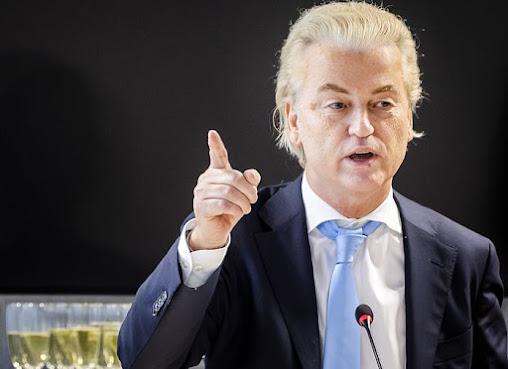
Geert Wilders following the Dutch General Election last November. Photo Credit: Remko de Waal/AFP/Getty Images.     F ellow centre-lef...