Showing posts with label Liberal Democrats. Show all posts

Tuesday, 17 January 2023

Tribalism: A Fair Warning


Well, I am once again a member of the yellow political tribe, after rejoining the Liberal Democrats last month. This has led me to think a lot about the place of political parties and the impact of tribalism within democracy. In this article, I discuss tribalism and issue a warning to everyone who cares about a viable functioning liberal democracy.

I have been a member of a political party for most of my adult life. For most of that time I have been a member of the Liberal Democrats and I was briefly a member of the Green Party; it is safe to say that party affiliation has always been an important part of my political identity. As is the adversarial nature of British politics, I have occasionally fallen foul of petty tribalism myself and petty point scoring. Social media (especially Twitter) seems to exacerbate tribalist temptations. On reflection, what did my tribalism achieve? Arguably, very little, save a political ego boost. So, in part, this article is a warning to myself, as much as it is a warning to anyone else.

Liberals and progressives of all kinds have often critiqued nationalism and egoism for breeding hatred and selfishness. Tribalism is merely nationalism extrapolated to the level of political parties. It breeds mistrust, even hatred, towards other people for no other reason than that they are a member of another political tribe. The tribal mentality informs nationalism just as much as it informs party tribalism. It also informs the group egoism and privilege that informs many parties, especially parties which often exercise political power. The defence of tribe is as powerful within political discourse as it is dangerous.

Tribalism is poison in the veins of any liberal democracy. While competition between parties is vital to any multi-party democracy, tribalist mistrust and selfishness is corrosive to the political culture of any liberal democracy. If left unchecked, it can breed irreconcilable differences, differences that in time can breed extremism which can endanger a viable liberal democracy. It also breeds cynicism and mistrust towards politics and democracy amongst the general population, further making politics susceptible to forms of political extremism.

A liberal democracy can only survive as long as there is a degree of cooperation between its major political actors and a democratic consensus between the major political parties. No democracy can endure with irreconcilable differences with swathes of the population no longer trusting elected politicians or the institutions of democracy. Liberal democracy rests on its political actors being driven by the pursuit of the common good and the public interest. If they allow tribalism and the vested interest to get in the way of the common good and the public interest, it will undermine the very foundations upon which a healthy democracy rests.

In a true democracy, all citizens are political actors. Therefore, all citizens are responsible for their political conduct and are responsible for the type of democracy their conduct leads to. If you want a democracy that rests upon hate, cynicism and tribe; be hateful, cynical and tribal. If you want to democracy that is kind, cooperative and respectful; be kind, cooperative and respectful yourself. As free, rational political actors, we have political agency. We are responsible for our political actions, and we are responsible for the type of democracy that we create.

No political party has a monopoly on political wisdom or good policies. All democratic parties can learn from one another. Despite now being a Liberal Democrat again, I still admire other progressive parties. I deeply admire the Green Party (which I was briefly a member of). It has a vital role to play in combating the climate emergency and in campaigning for climate justice. Caroline Lucas continues to be my favourite non-Lib Dem MP. In Zack Polanski, the Greens have an exceptional Deputy Leader. I also admire progressive politicians across the Labour Party, as well as Labour’s sister party, the Co-operative Party. I have even admired moderate Conservatives in the past, such as Ken Clarke, Heidi Allen and Sarah Wollaston (the latter two subsequently defected to the Liberal Democrats). I take inspiration from the Attlee and Wilson Labour governments of the past, as well as from the Macmillan Conservative government.

The first past the post voting system breeds adversarial politics through its winner takes all approach to elections. This helps to ingrain a zero-sum game approach within British politics. I believe that moving to proportional representation (preferably the single transferable vote) would lead to a strengthening of British political culture and would equally create a politics that is kinder, more collegial and more respectful. PR would naturally result in parties having to work together more often. You cannot be a supporter of multi-party liberal democracy and believe in a narrow range of viable political opinion. In a true liberal democracy, political opinion should be as wide as possible, with the exception of parties and political actors that advocate hatred towards minorities or violence. No liberal democracy should ever tolerate intolerance, for that has an even bigger corrosive impact on the foundations of liberal democracy than any form of party tribalism.

British politics needs to be more pluralistic and parties need to cooperate more. This is especially the case for progressive parties. I have long advocated for Labour, the Liberal Democrats and the Greens to work together when and wherever possible. To this end, it is vital that at the next general election, all three parties campaign tactically to focus their resources on constituencies where they are best placed to unseat incumbent Tories. This must also be accompanied by the most sophisticated and wide-ranging tactical voting campaign ever seen in a British election. Tactical voting should actively be encouraged by all progressive parties due to the shortcomings of first past the post. It is also essential that all the progressive parties stand on a common platform of proportional representation, Lords reform, ending the climate emergency, opposing austerity and saving the NHS.

Let us be kinder and more respectful to our fellow democrats. While legitimate criticism and policy disagreements are essential for democratic political discourse, let us never stop trying to find the common ground between the parties. Let us strive for consensus and the common ground with the same righteous energy that we call out injustice, hatred and discrimination. Democracy ultimately rests upon a just and fair overlapping consensus between citizens and major political actors. Let’s build bridges of fairness, not walls of tribal intolerance.

In a liberal democracy, we have the freedom to speak, but that implicitly means that we have the freedom (even the responsibility) to listen to one another. In our social media age, we have mastered the prior and neglected the latter. A viable liberal democracy requires debate, but it equally requires dialogue. We must not lose sight of this. If you want a build a healthier, stronger, kinder democracy, then spend more time finding out what we have in common with each other politically, than on highlighting what we disagree on. It’s that simple!

Thursday, 15 December 2022

The Strange Rebirth of my Liberal Democrat Membership

Liberal Peer and father of the post-war welfare state, William Beveridge (left) with Liberal Party Leader, Jo Grimond (centre) and Liberal Peer, Frank Byers in 1960.

Credit: Press Association Photos  

I began 2021 as a member of the Liberal Democrats, I will end 2022 as a member of the Liberal Democrats. This statement does not do justice to the political hiatus which I chose to undertake for much of that period. I initially left the Liberal Democrats in February 2021, only to find myself rejoining now 22 months later in December 2022.


The reasons I initially chose to leave the Liberal Democrats back in February 2021 were a mixture of reasons. Firstly, the dejection I felt following Ed Davey’s victory in the leadership election of 2020. Secondly, my concern that the party was not doing enough to reach out to left behind working class communities. The final reason was the anguish I felt trying to explain the hardships caused by Coalition austerity, especially following what I have experienced here in Blackpool. All of which led to profound disillusionment for me.


So, what has changed in the last 22 months? I have been pleasantly surprised by the performance of the Liberal Democrats during that time. Not only did the party win a series of by-election victories in Chesham and Amersham, North Shropshire and Tiverton and Honiton, but the party also seems to be recovering some of its centre-left identity. From being first to propose a windfall tax on the oil and gas giants, to attempting to extend free school meals to all schoolchildren in receipt of universal credit, to opposing the Tories’ undemocratic plans for voter ID, that will impact working class people the most; the latter two Labour abstained on in the Lords. In addition, the party is committed to trans rights, rejoining the European Single Market, supporting the rights of immigrants and asylum seekers and only on Tuesday called for a ban on home repossessions and evictions over Christmas.


I also found encouragement from the annual general meeting of the Social Liberal Forum earlier in the week. At which, I successfully got a motion passed calling for a recommitment to a social liberal Keynesian approach to the economy, along with which, I also got the SLF to commit to supporting the strike action by NHS nurses. The final encouragement I got came yesterday, following a long political conversation with a good Liberal Democrat friend, who is also a student of radical social liberal politics.


To fully understand my decision to “re-rat” (as Churchill said upon rejoining the Conservative Party in 1924), it is important for me to discuss the political journey that I have been on in the last few months. In October last year, I joined the Green Party and left in the April of this year. All in all, I have a lot of time for the Green Party and recognise that it has a lot of values and policies that it shares with the Liberal Democrats. However, I did have several policy differences with the Greens, especially on HS2, nuclear power, Scottish independence and NATO. I was also shocked by how well organised a vocal transphobic minority was in the party. Finally, as a self-conscious liberal, my personal principles and values had remained solidly committed to social liberalism, a fact which came increasingly difficult to reconcile with the more dominant eco-socialist and deep ecologist factions within the party.


In short, I felt that the Green Party was not the right fit for me politically. But, I should say that I still have a few good friends in the Green Party, including former Liberal Democrats, and that I hope where possible, the two parties will work together. I have always held to a pluralist attitude to politics, and that is not going to stop now. Venomous petty tribalism breeds popular cynicism, that is dangerous and damaging for any viable liberal democracy. Parties, especially progressive parties, should be prepared to work together to advance the issues, policies and aims that they have in common.


Following my departure from the Green Party, I began to become more interested in the Co-operative Party and by extension the Labour Party of Keir Starmer. I even went to the Co-operative Party conference, held in Leeds in October this year. Remarkably, you do not need to be a Co-op Party member in order to go to their conference. I like and admire the Co-op Party and have been a supporter of the co-operative movement for much of my political life. However, it became increasingly clear to me that there would never be a place for me in a party so closely aligned to an increasingly authoritarian Labour Party. I also believe, that at a philosophical level, the co-operative economic model has often been stifled by the statism of the Labour Party. Considering that the Co-op Party does not stand independent candidates in its own right, I could never be a member of a party that required me to be silent on the unjust and authoritarian policies and attitudes of the Starmer Labour Party.


I have spent the last few months reflecting on British politics, and I do not deny that there is a certain freedom that comes from being strictly independent of any political party. However, my politics remain that of the radical social liberal tradition. This is the tradition of John Stuart Mill, Harriet Taylor, Thomas Hill Green, Leonard Hobhouse, John Dewey, William Beveridge, Jo Grimond, James Meade and Charles Kennedy. No party is truly perfect and no party has a monopoly on political wisdom. I came to the view, that the radical liberal tradition needed to be preserved and that it would be a tragedy if it was allowed to perish from British politics. Ultimately, it has become important for me to rejoin a clan of fellow social liberals. Independence is nice, political kinship is even better.


At a time when the Conservatives are presiding over a historic cost of living crisis with immense social injustice on the rise, and with Labour seemingly getting more authoritarian and small-c conservative by the day, it is impossible for me to remain independent at this moment in British political history. Given that I now realise that neither the Greens nor the Co-op Party are the right fits for me politically, rejoining the Liberal Democrats became the only realistic alternative to being independent. I am encouraged by the party’s commitment to universal basic income (UBI). Even if UBI gets slightly watered down to being a Guaranteed Minimum Income (GMI) at some point (as is being considered to my understanding), I would be more than happy to campaign for a Liberal Democrat party committed to either UBI or GMI as one of its top policies.


I regret to inform that I am not about to become an apologist for Coalition austerity, nor am I going to turn my back on forging a more pluralist politics (neither of which I did the last time I was a member of the Liberal Democrats). If anything, I have returned to the Liberal Democrats to fight for the values, principles and radical policies I believe in. It is easy to snipe from the side-lines, I have done some of that, but I have decided that the radical liberal tradition needs to be fought for and its flame rekindled. At least in my mind, I have come to realise that there is no more natural home for this tradition than within the Liberal Democrats. Where the party is lacking, I intend to fight to make it better. The first attempt to do so will probably begin very soon.


The Liberal Democrats and British liberalism more broadly have a lot to contribute to building a fairer, freer, greener and more socially just society. There needs to be a battle of ideas about the future of British politics and radical social liberalism needs to be at the heart of it. Above all, I hope that the Liberal Democrats will be true to its commitment in the preamble to the party’s constitution that “no-one shall be enslaved by poverty, ignorance or conformity”. I, along with thousands of other Liberal Democrats, will fight to ensure that this is the case.

Only a Just Society can Defeat Hard Right Populism

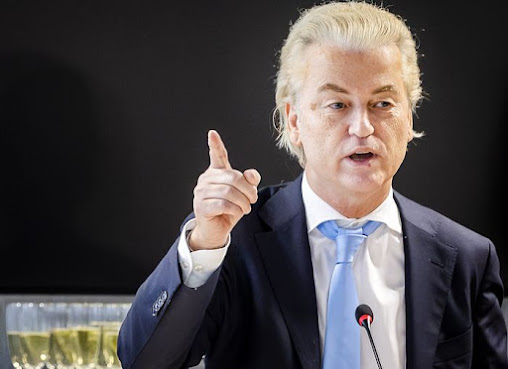
Geert Wilders following the Dutch General Election last November. Photo Credit: Remko de Waal/AFP/Getty Images.     F ellow centre-lef...