Showing posts with label Democracy. Show all posts

Saturday, 13 January 2024

Only a Just Society can Defeat Hard Right Populism


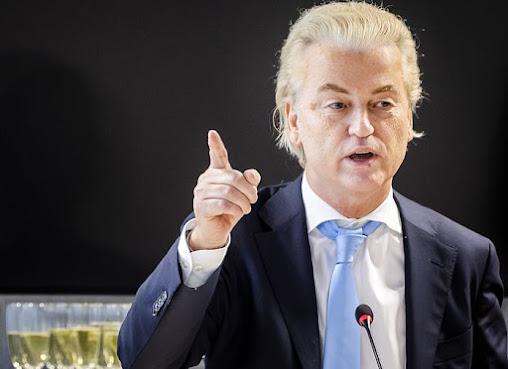
Geert Wilders following the Dutch General Election last November. Photo Credit: Remko de Waal/AFP/Getty Images.


Fellow centre-left progressives, there is a problem. Hard right populism is not going away. Across Britain, America and the European Union, in some respects, it is only getting stronger.


Last month, at a town hall event in the US state of Iowa, Donald Trump said that he would only be a dictator on “day one”. This was a chilling indication of the possible kinds of fascistic authoritarianism that we could expect should Trump return to the White House. How plausible is it to be a dictator on one day and then a wholehearted democrat the next?


In the EU, things are little better. In November last year, many were shocked to see the party of Geert Wilders come out on top in the Dutch General Election. It was the first time a far-right party had triumphed in the post-war history of the Netherlands. While in France, Marine Le Pen’s National Rally continues to be a strong force in French politics. In Germany, the far-right Alternative for Germany (AfD) party is polling in second place ahead of the Social Democrats of Chancellor Olaf Scholz. Finally, and most alarmingly of all, in Italy last Sunday, a rally of hundreds of black shirted, raised arm saluting fascists was held in Rome. Italy’s ruling Brothers of Italy party, led by Prime Minister Giorgia Meloni, is itself a descendant of Italy’s post-war neo-fascist movement.


What about here in Britain? Surely, Brexit must have vanquished our hard right populist tendencies? Far from it. In a recent opinion poll, Reform UK (the rebranded Brexit Party) polled 11% in third place, ahead of the Liberal Democrats. As for the Conservative Party, it continues to lurch towards the hard right on everything from immigration to transgender rights. The former Tory Home Secretary, Suella Braverman is clearly positioning herself for a future leadership contest. Under her leadership, the Tories would become an unashamed party of the populist hard right (assuming they are not already).


We on the centre-left of British politics need to stop pretending that hard right populism will magically go away by itself. It won’t. If anything, it is getting stronger and more forthright on both sides of the Atlantic, not weaker. The only way to address this hard right populism is to address the social injustices, the economic hardships and the precarity that is helping to fuel it. For example, research has shown that economic inequality was a significant factor in the outcome of the 2016 Brexit Referendum.


Now is the time for a wholeheartedly progressive, even radical, position on social and economic policy. Britain needs a radical break from Thatcherism, not the continuation of an economic paradigm that has devastated whole communities. An economic paradigm that has led to many working class and lower middle class people having to live in profound economic insecurity and powerlessness. These are the perfect conditions of hardship, disillusionment and alienation from which hard right populism can grow in strength.


Ahead of the next General Election, both Labour and the Liberal Democrats need to be far bolder and more radical in their policy offerings to the public. The NHS is under severe pressure by historic standards. Poverty continues to rise. The education of children is still suffering from the impact of the pandemic. The housing crisis is continuing unabated. Tory governmental kleptocracy is rife. And Britain is woefully falling behind on meeting its climate change commitments, something that will lead to even more social injustices in the future. Put simply, things cannot go on like this.


If these issues remain unresolved, then the populist hard right will continue to thrive. The populist hard right offers simple divisive solutions to complex problems. They target immigrants, asylum seekers, trans people and other defenceless minorities, while ignoring the root causes of economic injustice and social hardship. Thatcherism has to end by being replaced by a new progressive consensus rooted in liberalism and real social democracy.


The case for introducing a Guaranteed Basic Income targeted at the poorest in-order to address poverty is overwhelming. A Guaranteed Basic Income could end structural poverty once and for all. No one should be too poor to afford to buy food or the essentials in life. It is not enough for people merely to exist; they need to thrive. Therefore, any Guaranteed Basic Income would need to rise gradually to reach the level necessary to lift people above the poverty line.


The NHS, schools, housing and local government cannot be “reformed” out of this crisis. They need a radical increase in public spending. This raises important questions about the method of raising tax revenue. We should shift the burden of taxation on to taxing asset-based wealth by introducing both a land value tax and a mansion tax, while increasing capital gains tax.


Our workplaces are in desperate need of democratisation. We should seek to adopt a model of (German-style) co-determination that would lead to a notable proportion of a company’s board being comprised of worker representatives. This should exist in tandem with increasing the number of co-operatives and mutuals within the economy.


Finally, we on the centre-left have to acknowledge that the privatisation of rail, water and energy has failed, while private executives and elite shareholders have benefited from the profits generated. The railways should be nationalised and brought into public ownership. We should consider doing the same for energy too (at least in terms of national energy infrastructure). Whereas the regional basis of the water industry makes it a prime candidate for mutualisation. This would see the profits of the water companies shared for the benefit of consumers, while consumers would help to elect the governing boards of the water companies.


These measures are needed if we are to build an economically just society. Only a just society can hope to address hard right populism. We need to forge an alternative consensus to Thatcherism, one that is centred around liberalism and social democracy. Hard right populism will only be defeated by ending the economic and social injustices that are fuelling it. Otherwise, liberal democracy in Britain and numerous other countries shall continue to suffer.


I will leave you with the words of Franklin D Roosevelt. “True individual freedom cannot exist without economic security and independence. People who are hungry and out of a job are the stuff of which dictatorships are made.” In 2024, progressives on both sides of the Atlantic need to heed Roosevelt’s words now more than ever.

Sunday, 7 May 2023

Time to Rediscover Real Republicanism

The proposed flag of an English Republic by William James Linton.


This weekend the eyes of the world are on London for the Coronation of King Charles III. The Coronation has shown that Britain as a nation excels at delivering pomp and ceremony. This is despite the fact that the ancient tradition of coronating a King, steeped in feudal symbolism and the Protestant religion, looks increasingly out of place in a modern, secular and multicultural liberal democracy. It is also an important moment to reflect upon the republican political tradition, as dozens of republican protesters have been arrested for protesting against the Coronation and for exercising their democratic rights and freedoms.


What is most striking at first glance is the great poverty of republicanism in today’s Britain. By this, I do not mean that only 27% in a survey last year would support Britain becoming a republic. I mean that real republicanism has largely been forgotten. Today, republicanism is seen by most, including by most republicans, as simply meaning support for an elected head of state. This is a great philosophical injustice. This is republicanism at its most banal, its most vapid and its most politically vacuous.


Republicanism as a political theory is not solely, or even mostly, about having an elected head of state. In fact, throughout history many republics have not had direct elections for the head of state. A contemporary example of this is that of Germany. In Germany, the President is elected by a national Federal Convention. The Convention is comprised of elected members of the German Parliament, the Bundestag, as well as elected delegates from each of the German states. Even the American President is, strictly speaking, not directly elected. Voters in America do not vote directly to elect the President, they vote to elect delegates to the Electoral College. It is the Electoral College that elects the President, not the American people directly.


For most republics throughout history, having an elected head of state has merely just been the cherry on top of the republican cake. Republicanism is about much more than the political nature of the head of state, it is about the political nature of the structure of government, its elected representatives and the citizens who vote for them. It is about the values, the principles, the attitudes and the political culture that informs a political society as a whole. Real republicanism is not just about a head of state, it is about the whole nature of government, citizenship and political society.


Republicanism as a political theory centres upon building a political society that values citizenship, virtue, democratic participation and the common good. These principles inform all the political actors (citizens, voters, activists and politicians) and all the political institutions (councils, devolved assemblies, the national parliament and the head of state) of a society. It should recognise the common citizenship of all within society, as well as believing that all citizens have a right to democratically participate in the running of the society, and that in all things, the common good must be advanced. Activists and politicians must be driven by a sense of virtue and responsibility to the people. They must recognise what is in the common good of society and always defend the principles of democratic participation for all, while respecting their political opponents and treating them with virtue.


Liberty is also of great importance to republicans. In his 1997 work Republicanism: A Theory of Freedom and Government, the Irish political philosopher Philip Pettit revived the concept of republican liberty. This being liberty as non-domination. The freedom of citizens to be free of the arbitrary interference of another to make certain decisions on their behalf. In other words, the liberty that comes from not being deprived of the agency and autonomy to make important decisions, that you are able to make for yourself, without your prior consent.


Pettit contrasts republican freedom with negative liberty, the freedom from physical restraint and coercion. However, I would argue that republican liberty is the truest expression of classical liberal negative liberty. You cannot have true freedom from coercion, unless you have liberty in the absence of domination. Not to mention, that there are aspects of republican liberty that can be identified in the works of great liberals, such as John Locke, Thomas Paine and John Stuart Mill.


Today, excellent examples of republican political societies can be seen in modern republics, such as Ireland, Germany, Portugal, Finland, Iceland and Taiwan. However, I would argue that Norway, Sweden and Denmark are more republican in terms of their political societies than the modern United States. This may seem like a controversial statement considering that Norway, Sweden and Denmark are constitutional monarchies and not republics. These Scandinavian countries with strong political traditions centred around community and social democracy are far more in keeping with the values and principles of a republican political society than the US. Especially those parts of modern America that are gripped by divisive right-wing politics, conspiracy theories, the rejection of democratic principles and the post-truth fascistic politics of Donald Trump. The modern US Republican Party is far removed from advocating for real republicanism. It truly is “Republican” in name only.


The first step towards Britain becoming a Republic is to build a republican political society. Individual republicans can start to do this right now by embodying the republican principles of public service, virtue, mutual citizenship and the common good in all of their actions. Republics are built by citizens, not just by political institutions and national titles. Regardless of Britain’s constitutional monarchy, there is nothing to stop republican principles from being advanced throughout British society and British politics. We can start to lay the foundations for a future British Republic by embodying republican principles in our personal political conduct. In time, if practiced widely enough, this would foster a political society that centres around a richly republican political culture of citizenship, virtue, democratic participation, republican freedom and the common good.


It would help in the development of a popular republican imaginary, if republicans in Britain today had a symbol behind which they could rally behind. Republican movements throughout the ages have used flags to symbolise the republican rebirth of their nations. The best example of this is the blue–white-red vertical striped French tricolour that originated in the first French Revolution of 1789. In The English Republic, published in 1851, William James Linton proposed a blue–white–green horizontal striped tricolour (see above) to be the flag of his English Republic. British republicans previously used a red-white-green horizontal tricolour from the early 19th century until the early 20th century. However, this flag is identical to the modern flag of Hungary. Therefore, it is imperative that British republicans create a modern flag to represent the republican movement and the republican political society and government they hope to build.


This Coronation weekend, we must remember that republicanism is a deep and rich political philosophy that amounts to far more than just the nature of a country’s head of state. To build a Republic without republicanism is a fruitless task. If Britain was today to start having an elected head of state, without the formation of a republican political society, it would be a “Republic” in name only. Let us begin to build a liberal democratic Commonwealth by fostering a new republican form of politics in our society. The time has come for British republicans to rediscover real republicanism.

Tuesday, 17 January 2023

Tribalism: A Fair Warning


Well, I am once again a member of the yellow political tribe, after rejoining the Liberal Democrats last month. This has led me to think a lot about the place of political parties and the impact of tribalism within democracy. In this article, I discuss tribalism and issue a warning to everyone who cares about a viable functioning liberal democracy.

I have been a member of a political party for most of my adult life. For most of that time I have been a member of the Liberal Democrats and I was briefly a member of the Green Party; it is safe to say that party affiliation has always been an important part of my political identity. As is the adversarial nature of British politics, I have occasionally fallen foul of petty tribalism myself and petty point scoring. Social media (especially Twitter) seems to exacerbate tribalist temptations. On reflection, what did my tribalism achieve? Arguably, very little, save a political ego boost. So, in part, this article is a warning to myself, as much as it is a warning to anyone else.

Liberals and progressives of all kinds have often critiqued nationalism and egoism for breeding hatred and selfishness. Tribalism is merely nationalism extrapolated to the level of political parties. It breeds mistrust, even hatred, towards other people for no other reason than that they are a member of another political tribe. The tribal mentality informs nationalism just as much as it informs party tribalism. It also informs the group egoism and privilege that informs many parties, especially parties which often exercise political power. The defence of tribe is as powerful within political discourse as it is dangerous.

Tribalism is poison in the veins of any liberal democracy. While competition between parties is vital to any multi-party democracy, tribalist mistrust and selfishness is corrosive to the political culture of any liberal democracy. If left unchecked, it can breed irreconcilable differences, differences that in time can breed extremism which can endanger a viable liberal democracy. It also breeds cynicism and mistrust towards politics and democracy amongst the general population, further making politics susceptible to forms of political extremism.

A liberal democracy can only survive as long as there is a degree of cooperation between its major political actors and a democratic consensus between the major political parties. No democracy can endure with irreconcilable differences with swathes of the population no longer trusting elected politicians or the institutions of democracy. Liberal democracy rests on its political actors being driven by the pursuit of the common good and the public interest. If they allow tribalism and the vested interest to get in the way of the common good and the public interest, it will undermine the very foundations upon which a healthy democracy rests.

In a true democracy, all citizens are political actors. Therefore, all citizens are responsible for their political conduct and are responsible for the type of democracy their conduct leads to. If you want a democracy that rests upon hate, cynicism and tribe; be hateful, cynical and tribal. If you want to democracy that is kind, cooperative and respectful; be kind, cooperative and respectful yourself. As free, rational political actors, we have political agency. We are responsible for our political actions, and we are responsible for the type of democracy that we create.

No political party has a monopoly on political wisdom or good policies. All democratic parties can learn from one another. Despite now being a Liberal Democrat again, I still admire other progressive parties. I deeply admire the Green Party (which I was briefly a member of). It has a vital role to play in combating the climate emergency and in campaigning for climate justice. Caroline Lucas continues to be my favourite non-Lib Dem MP. In Zack Polanski, the Greens have an exceptional Deputy Leader. I also admire progressive politicians across the Labour Party, as well as Labour’s sister party, the Co-operative Party. I have even admired moderate Conservatives in the past, such as Ken Clarke, Heidi Allen and Sarah Wollaston (the latter two subsequently defected to the Liberal Democrats). I take inspiration from the Attlee and Wilson Labour governments of the past, as well as from the Macmillan Conservative government.

The first past the post voting system breeds adversarial politics through its winner takes all approach to elections. This helps to ingrain a zero-sum game approach within British politics. I believe that moving to proportional representation (preferably the single transferable vote) would lead to a strengthening of British political culture and would equally create a politics that is kinder, more collegial and more respectful. PR would naturally result in parties having to work together more often. You cannot be a supporter of multi-party liberal democracy and believe in a narrow range of viable political opinion. In a true liberal democracy, political opinion should be as wide as possible, with the exception of parties and political actors that advocate hatred towards minorities or violence. No liberal democracy should ever tolerate intolerance, for that has an even bigger corrosive impact on the foundations of liberal democracy than any form of party tribalism.

British politics needs to be more pluralistic and parties need to cooperate more. This is especially the case for progressive parties. I have long advocated for Labour, the Liberal Democrats and the Greens to work together when and wherever possible. To this end, it is vital that at the next general election, all three parties campaign tactically to focus their resources on constituencies where they are best placed to unseat incumbent Tories. This must also be accompanied by the most sophisticated and wide-ranging tactical voting campaign ever seen in a British election. Tactical voting should actively be encouraged by all progressive parties due to the shortcomings of first past the post. It is also essential that all the progressive parties stand on a common platform of proportional representation, Lords reform, ending the climate emergency, opposing austerity and saving the NHS.

Let us be kinder and more respectful to our fellow democrats. While legitimate criticism and policy disagreements are essential for democratic political discourse, let us never stop trying to find the common ground between the parties. Let us strive for consensus and the common ground with the same righteous energy that we call out injustice, hatred and discrimination. Democracy ultimately rests upon a just and fair overlapping consensus between citizens and major political actors. Let’s build bridges of fairness, not walls of tribal intolerance.

In a liberal democracy, we have the freedom to speak, but that implicitly means that we have the freedom (even the responsibility) to listen to one another. In our social media age, we have mastered the prior and neglected the latter. A viable liberal democracy requires debate, but it equally requires dialogue. We must not lose sight of this. If you want a build a healthier, stronger, kinder democracy, then spend more time finding out what we have in common with each other politically, than on highlighting what we disagree on. It’s that simple!

Only a Just Society can Defeat Hard Right Populism

Geert Wilders following the Dutch General Election last November. Photo Credit: Remko de Waal/AFP/Getty Images.     F ellow centre-lef...