Friday, 23 July 2021

There can be no Progressive Future without Proportional Representation

The United Kingdom is not a true democracy. While everyone over the age of 18 may have the right to vote, those votes are not of equal weight. They also only apply to the lower house of Parliament, the House of Commons. The House of Lords has not seen a single national election in its 700 year history. Alongside the necessity to deliver social justice and end the climate crisis, progressives have another great challenge, to build a British liberal democracy worthy of the name.


If you do not vote for the party that wins in your local constituency at a general election, your vote has had no impact on the final result. This means that the vote of people in marginal constituencies (assuming they vote for the parties which are in contention for the seat) carry a much larger electoral weight, than the votes of people in safe seats. Under the First Past The Post voting system, smaller parties, such as the Green Party and the Liberal Democrats are structurally disadvantaged under the system. Whereas establishment parties, such as the Conservatives, Labour and in Scotland, the Scottish National Party, hold a structural political advantage. This means that First Past The Post rarely reflects how people actually vote.


If we are to build a progressive country, we need to challenge the political establishment that allows for a corrupt voting system which effectively disenfranchises millions of people. This is a sham of democracy. It also undermines any potential for building a strong progressive consensus. First Past The Post leads to institutional conservatism as the parties which best preserve the status quo can cement their positions as parties of government, while smaller parties are unjustly denied fair representation. It also leads to tribalism between competing parties, petty point-scoring and ideological factionalism within parties. A system of Proportional Representation (PR) on the other hand would lead to the development of a more collegial, consensus-based politics.


The two best models of Proportional Representation are the Single Transferable Vote (STV) and the Additional Member System (AMS). STV is a form of Proportional Representation which supports preferential voting (the ranking of preferred candidates on the ballot paper) and would elect MPs in multi-member constituencies. This system is currently used for the devolved and local elections in Northern Ireland. It is used in the Scottish local elections and is used to elect the national Parliament of the Republic of Ireland. AMS is a hybrid voting system which combines First Past The Post constituencies with pure PR party lists. It is currently used to elect the Scottish and Welsh Parliaments, as well as the London Assembly. Internationally, it is used to elect the Federal Parliament of Germany.


However, there is one significant roadblock which prevents the establishment of a more progressive and democratic society here in the UK. That is the opposition of the Labour Party to Proportional Representation. This position is unhelpful and harms the prospects of forging bonds of solidarity between fellow progressives. It is utterly shameful for the Labour Party to prioritise its own power and privilege above the interests of the people and of democracy. The Green Party and the Liberal Democrats must never tire of denouncing Labour's shameless defence of a voting system which continually facilitates the election of single party majority Tory governments on a minority of the popular vote.


Labour is the only social democratic party in the developed world which supports First Past The Post. Labour more often than not, would rather preserve a voting system which benefits them disproportionately and allows for unfettered Tory governments, than support a voting system which would allow for fairer representation for smaller progressive parties. In this respect there is a corrupt bargain between Labour and the Conservatives to deny power and representation to the smaller parties of the progressive left. Labour must realise that the voting system is at the heart of our broken political system and the social injustices it so often creates.


How can Labour with an easy conscience support a voting system which almost entirely disenfranchises its own electorate in the rural south of England, let alone the vast majority of Scotland? If Labour is to truly live up to its principles of equality, democracy and solidarity, it must embrace Proportional Representation. Those brave electoral reformers within the Labour Party are the true custodians of Labour's principles today. Most Labour members, 83%, back Proportional Representation. It is time for Sir Keir Starmer and the Labour Leadership to follow suit.


The major progressive parties, Labour, the Liberal Democrats and Greens need to work together like never before in order to achieve electoral reform. At the very least, the progressive parties must vocally support anti-Tory tactical voting and embrace a common platform which amongst other issues would commit all the progressive parties to introducing Proportional Representation. Electoral pacts between progressive parties in a limited number of marginal Tory constituencies, should also be an option where appropriate.


There is a corruption at the heart of British politics. Its name is First Past The Post. Those parties who support this voting system do so against the real wishes of the people. Power and privilege in all its forms must be challenged. The political classes in both the Tories and Labour who continue to support this voting system must be called out for the corrupt sham of democracy which they support. The hypocrisy of so-called progressive Labour politicians who prevent Proportional Representation must be denounced.


The Greens, the Liberal Democrats and pro-PR Labour politicians must be in the vanguard of a reforming political movement to bring down the political corruption at the heart of the British establishment and to achieve real democracy. The feudalistic relic which is the House of Lords must be swept away and replaced with a democratic second chamber. The vote must be handed to all 16 and 17 year olds. But above all the life blood of our political institutional inequalities and political injustices, First Past The Post, must be abolished and replaced with a voting system worthy of the name. If you believe in democracy, support real democracy. Support Proportional Representation! Make Votes Matter!

Wednesday, 14 July 2021

The England Football Team Have Shown Our Tory Establishment For The Plastic Patriots They Truly Are


I think for the first time in my life, I am truly proud to be English. What is even more surprising is that it is football that has inspired this sense of English national pride in me. Like 31 million other people, I watched the England versus Italy game in the Final of Euro 2020 on Sunday. I was very disappointed to see England lose, but I am still very proud of the performance of England's Men's Football Team.


It is no secret to say that I am not a huge football fan, to put it mildly. What impressed me the most about this England Team was not just its skill on the pitch or the fact that it had reached its first major football international Final since 1966, but the honour and decency of England, its players and its manager. Gareth Southgate is a model of leadership who could put every senior British politician to shame. He is honest, humble and takes responsibility for his actions. He leads by example and as a result he has the respect and admiration from both players and fans alike. Then there are the players, at the start of every game they have taken a knee in solidarity with black communities and all the victims of racism. The solidarity the Team showed to support Marcus Rashford, Jadon Sancho and Bukayo Saka, following the racist abuse they received following the Final, is an example for everyone to follow. Jordan Henderson during the tournament has been unafraid to act as a proud ally for England's LGBT+ fans, which included him wearing rainbow pride shoe laces during the matches.


The England Team of 2021 are true role models who make England proud. They lead by example and are unwavering in their support for oppressed communities. Marcus Rashford, true to his working class roots, managed to persuade the government to continue to fund free school meals during the holidays last year. His campaigning alone has done much to improve the living standards of many of the poorest children in our country. I hope the England Team of 2021 will have inspired millions of boys and girls in England and around the world, regardless of their ethnicity, sexuality or class.


The England Team through its actions both on and off the pitch have revealed an England which is both liberal and progressive. It is an England of which I am deeply proud of. Nothing epitomises this more than the showing of public solidarity for Rashford, Sancho and Saka following the racist abuse which they received.


A greater contrast could not be drawn between the actions of the England Team and their anti-racist supporters and the current Conservative government. Priti Patel referred to taking the knee as “gesture politics”, which was condemned by Tyrone Mings. Boris Johnson refused to condemn people for booing players for taking the knee. Our right-wing nationalist Tory government has even tried to downplay the impact of racism within contemporary British society. They are attempting to whip up transphobia and deny fundamental rights to transgender people. And they continue to deny social justice to the poorest and most vulnerable people in our country.


For so long, this Tory government has been attempting to whip up English nationalism in order to wage its own version of a right-wing culture war. As the historian, David Olusoga has pointed out, the England Team "risk exposing the false dichotomy that underpins the right’s culture war"... the "concerted campaign to present race and class as binary opposites". However, the England Team has revealed a positive, progressive English identity. One which equally challenges the social injustices faced by working class people and the racial injustices faced by black, Asian and other ethnic minority communities. This progressive English identity has always existed, but up until recent days it has lacked the means of expression on the national stage.


This has revealed the current Tory political class for the plastic patriots which they are. They do not care for the real England or the real United Kingdom. They turn a blind eye to racial injustice, they undermine the rights of trans people and they try and pit pro-European communities against Brexit communities. They continue to alienate the people of Scotland and seem oblivious to the looming political and diplomatic crisis on the island of Ireland over the Northern Irish border.


“Red Wall” areas (those constituencies in the North of England and the Midlands, with large levels of deprivation, who have historically voted Labour) are often lazily stereotyped as culturally conservative. Polling evidence from YouGov however, has shown that “Red Wall” residents are no more conservative than the average UK population. In fact, on many important issues, they have a slight liberal leaning. The overwhelming majority of “Red Wall” residents support action against climate change and support children being taught about Britain's colonial history, including the impact of the slave trade. Both environmentalism and highlighting the racial injustice of Britain's colonial past are two issues which right-wing nationalists would brand as “woke”. These are issues which despite the lazy conservative stereotype are also important to English “Red Wall” communities.


My England is a progressive England, which believes that Black Lives Matter, that transgender people should not be vilified for being who they are, and that poor working class schoolchildren should not be left to starve during a pandemic. Real English and British patriots stand up against injustice. All the union flags in the world cannot disguise the fact that Boris Johnson and his government are no patriots.

Thursday, 4 June 2020

Remembering The Real British Empire


The Myth of Empire

Ah Great Britain, this sceptred isle! Britain which once ruled the waves and had a global dominion. Glorious Britannia which brought justice, parliamentary government and “civilisation” to the world. An Empire of benevolence and morality, like a mother to her children offering the light of guidance to her colonies. It built the Indian Railways, secured international trade links and put in place good legal order and effective public administration for its colonies. It nurtured them to the point to which they could become nations in their own right. This is the myth of Empire!

This myth is a justification narrative and discourse backed up by British culture. From the poetry of Rudyard Kipling; to the works of Joseph Conrad; to the 1950s and 1960s films depicting the heroism of Empire; to the documentaries of conservative historians; Britain is depicted as the just civilising imperialist. For decades schoolchildren were taught to think positively about the British Empire. Empire Day was actively observed as an article of patriotism. Rule Britannia was sung with real pride and maps of the world with areas shaded in pink were held in true awe.

This cultural hegemony led to the British people forgetting, or perhaps mis-remembering, their imperial past. In modern times it is sustained by the notion of British exceptionalism. This is the secular nationalist idea that Britain is a natural world beater (or at least ought to be). Britain according to this is a world power with all the bombast and entitlement of a would-be superpower, despite the vast, vast majority of the British Empire no longer existing. Similar to the American ideal of manifest destiny, Britain’s manifest destiny is to shape the world and continue to lead it as a moral power at the diplomatic level. According to this, Britain is exceptional and must be independent from less exceptional international forces with full control over its laws (from the ‘Mother of all Parliaments’), money (as the first truly global capitalist superpower) and borders. Clear traces of British exceptionalism are present in the debates surrounding Brexit.

The Reality of Empire

But what was the real British Empire? The real British Empire was the Empire of racism, exploitation and domination. For over a century and a half, Britain traded and sold Africans to plantation owners in the Caribbean and the Americas, and in return Britain received sugar and tobacco amongst other goods. The transatlantic economy of the 18th century was based on the physical enslavement of millions of Africans, facilitated by Britain. Profit and greed were the main motivators for both slave traders and imperialists alike. Even after the British slave trade was abolished in 1807, it was not until 1833 that slavery was abolished throughout the British Empire. The end of British slavery resulted in large amounts of compensation being paid to slave-owners for the loss of their “property”, while the slaves themselves were left in a precarious position often leading to poverty and unemployment. They had achieved their freedom from physical bondage, but not their freedom from socio-economic bondage or from institutional racism. The British Empire and the period of the slave trade treated black people as just another commodity to be bought and sold, nothing more than a piece of property to profit from.

What about the jewel in the crown of the Empire, the Indian subcontinent? Britain’s Indian Empire alone accounted for hundreds of millions of people. Benjamin Disraeli famously adorned Queen Victoria with the title of Empress of India. But this was no “civilising mission”. The discourse of bringing civilisation is a highly racist one designed to amplify cultural notions of racial supremacy. The Indian subcontinent has a very rich history and civilisation stretching back for thousands of years prior to the arrival of the British. Starting with the ancient Indus Valley civilisation and the Brahmanism of the period; the life of the Buddha and the emergence of Buddhism; followed by the Mauryan Empire and Ashoka the Great; it witnessed the Hindu revival and the Islamic conquests; finally it saw the magnificent Mughal Empire and Shah Jahan who built the Taj Mahal.

The relationship of the British East India Company and later the British Raj to the Indian subcontinent was one of economic extraction. Like with the slave trade, Britain’s Indian Empire was a source of profit. The much-lauded Indian Railways were not built for the good of the Indian people, but instead to link cotton fields to British ports, so that cotton could be efficiently shipped back to Britain. The railways were expanded following the Indian Mutiny of 1857-58 to ensure more effective military transport across the subcontinent and to maintain Britain’s grip on it. Up to 3 million people died from the Bengal famine of 1943, while there continues to be a scholarly debate as to whether Britain helped to cause the famine, Britain’s poor response undermined its credibility.

The British Empire was ruled through violence. In 1919, almost 400 people were massacred by British soldiers in Jallianwala Bagh, Amritsar in India. The actual number could be far higher. During the 1950s, Britain brutally cracked down on the Mau Mau rebels in Kenya as it had done a century earlier in India during the Mutiny of the 1850s. During the Boer War (1899-1902) in South Africa, Britain invented concentration camps to control the Boer population, which led to terrible human rights abuses. Colonial violence was also seen on the streets of Britain’s American Colonies and Ireland on the road to their eventual independence. Violence was also used on the domestic British population to suppress calls for democracy and political reform at home. The most infamous example of this was at St. Peter’s Field, Manchester in 1819, when 19 people were killed and hundreds injured in what became known as the Peterloo Massacre.

The Legacy of Empire

The British Empire has left behind a bitter legacy of racism, religious sectarianism and homophobia in many of its former colonies. Apartheid in South Africa owed much to the legacy of British colonialism. Britain’s terrible handling of the partition of India and Pakistan led to a million deaths and overlooked legitimate claims for nationhood from countries such as Kashmir, a conflict that continues to this day. The Arab-Israeli Conflict dates from the end of the British mandate in Palestine in 1948. Many countries in Africa, the Americas, Southern Asia and Oceania continue to have homophobic policies which date from the days of British imperial rule. Britain exported its homophobic policies and its homophobic Anglican religion to many countries with no previous history of state-imposed homophobia.

Today whole swathes of the British population are kept in ignorance of their imperial past by the imperial mythology that serves the British establishment. We look at glorious Georgian and Victorian buildings and monuments in many of our major cities, such as Manchester, Liverpool, Bristol, Birmingham, Lancaster, Glasgow and London and fail to ask what paid for them. Some would have been paid for through slavery, others by the exploitation of distant colonists. Britain got rich off the misery of its colonial subjects. Britain’s quasi-feudal establishment gained the power and prestige of global rulers, while the legitimate demands for political citizenship from its lower middle class, working class and female population were actively suppressed. The British Empire was first and foremost a system of domination at home and abroad.

Today, the United Kingdom can rightly claim to be a great country. It is a successful (if imperfect) liberal democracy and minority rights are protected throughout society. However, we cannot overlook the fact that vast inequalities still exist on the basis of race, gender, class, sexuality and disability amongst other social characteristics. We must not overlook the injustices of our past. The British Empire was built on domination, exploitation, slavery, racism, sectarianism, classism, misogyny and homophobia. The British people should be as conscious of their controversial past as the Germans are towards the crimes of the Nazis.

Britain can build a great future, but only with true knowledge of its past. We should aim to rectify the negative legacy of the British Empire where possible. Children and adults should be properly educated about the history of British colonialism. We should free ourselves from any delusions of British exceptionalism. Britain is a great country, but one of many around the world. As a nation, if we can recognise the negative parts of our past, we can come together to build a better, brighter future, one built on liberty (as non-domination), equality and community for all.

Monday, 25 May 2020

We need a Mont Pelerin of the Left

The neoliberal world is in turmoil. The economic ideology which has been a dominant feature of international politics for several decades faces its biggest challenge to date with the response to COVID-19. Neoliberalism in many countries, especially in the West, has reached hegemonic status and it continues to have a profound impact on developing world countries as well.

The emergence of neoliberalism onto the global stage in the 1970s and early 1980s was the result of decades of intellectual and ideological development by right-wing academics and economists. The seminal meeting in the formation of neoliberalism was the meeting at Mont Pelerin, Switzerland in 1947. This followed on from an earlier meeting at the Colloque Lippmann in Paris in 1938. Presiding over the meeting was the leading right-wing economist Friedrich von Hayek, who a few years earlier had published his most well-known work, The Road to Serfdom. Alongside Hayek were the leading neoliberals of the time including Hayek’s mentor and fellow Austrian economist Ludwig von Mises, the Chicago economist Milton Friedman and the leading Ordoliberal economist, Wilhelm Röpke. All the major schools of neoliberal thought were represented at Mont Pelerin: the Austrian School, the Chicago School and the Ordo School.

The Mont Pelerin gathering laid the foundations of the Mont Pelerin Society, along with a statement of six aims which gave an ideational basis to neoliberalism. Over the decades that followed, Hayek and Friedman worked to establish a public policy basis for what Friedman was already calling by 1951 “neo-liberalism”. The ideas of neoliberalism were disseminated by academic research institutions such as the Economics Department of the University of Chicago and leading right-wing think tanks such as the Institute of Economic Affairs (IEA) established in the United Kingdom in 1955.

What began to emerge therefore was the framework of an international ideology which has become established as neoliberal hegemony. Today that hegemony has been challenged by the global coronavirus crisis like never before, as domestic governments extensively expand their intervention in the economy to counter the public health crisis. Neoliberalism has faced substantial challenges in the past, such as the North Atlantic Financial Crisis of 2008. Back then the narrative was that neoliberalism was finished and that a return to a more statist, if not Keynesian, economic order seemed likely. This did not happen and instead a new phase of neoliberal austerity began with unprecedented cuts to social welfare and public services.

This time must be different. There can be no going back to austerity. Even leading British right-wing think tanks appear to see that the writing is on the wall for austerity. What progressives need to ensure is that a viable alternative replaces neoliberalism which places the values of social justice, the common good, ethical economics and economic democracy at its heart. To do this, there will need to be a project not too dissimilar to the one which began to forge transatlantic neoliberalism at Mont Pelerin. In the aftermath of the coronavirus crisis, there will need to be a consensus on the left as to the form an alternative to neoliberalism should take. This will inevitably include a gathering of leading progressive intellectuals. The likes of Rutger Bregman, Mariana Mazzucato, Thomas Piketty, Ha-Joon Chang, Naomi Klein, Guy Standing and Amartya Sen would seem like obvious candidates to provide the ideas to shape such an alternative.

What issues would a Mont Pelerin of the left need to resolve? Firstly, how best to deliver social justice and a radical redistribution of wealth from the richest to the poorest in society. One idea which has achieved greater prominence since the current crisis began, is that of the universal basic income (UBI). While UBI has committed supporters from the socialist left to the libertarian right (even Friedman advocated a form of it with the negative income tax), the real battleground will be around the form a UBI takes, how generous it is and how it is funded. A libertarian model of flat taxes and minimal welfare provision to deliver UBI would seem greatly unpalatable to socialists, social democrats and social liberals.

Another issue that would need to be resolved is the politics of ownership. Should key industries be nationalised and taken back into the public sector? What role should there be for employee models of ownership, profit-sharing and traditional worker cooperatives? Not to mention the reorganisation of the firm as an institution with a view to making it more democratic and accountable to both its workforce and customer base.

An overriding theme of any alternative to neoliberalism has to be a commitment to ending that other major global crisis which risks the stability of the world, the crisis of climate change. Ideas such as the Green New Deal would help to facilitate a sustainable economy with a high reliance on renewable energy sources built on solid Keynesian foundations. If the current crisis has shown anything it is that the reckless pursuit of profit and growth as being the only viable ends to the economy is hollow and even destructive. There is more to an economy than just GDP. New measurements of the economy will have to be adopted as well, perhaps those which measure levels of inequality and wellbeing.

            The international academic left will have to bring together the multiple strands of thought which it advances against neoliberalism into a single project with a multinational basis. What is needed is a new form of progressive politics for the world of the twenty-first century, just as social democracy and Keynesian social liberalism were well-placed to effectively address the socioeconomic inequalities of the post-war era. A post-Keynesian and progressive gathering similar to that at Mont Pelerin could begin to usher in an effective and viable alternative to neoliberalism. The ideas of such a programme could inform policy research in numerous academic institutions and progressive think tanks around the world with the potential to construct a new progressive hegemony. The old economic order is crumbling and must be replaced by something more progressive and egalitarian than what went before. There is no time to waste.


Bibliography

            Birch, Kean (2017) A Research Agenda for Neoliberalism. Cheltenham: Edward Elgar Publishing Limited.
Birch, Kean and Mykhnenko, Vlad (eds.) The Rise and Fall of Neoliberalism. London: Zed Books.
Friedman, Milton (1951) “Neo-liberalism and its Prospects” in Farmand, 17 February 1951, pp. 89-93: https://miltonfriedman.hoover.org/friedman_images/Collections/2016c21/Farmand_02_17_1951.pdf. Accessed: 25/05/2020.
            The Guardian – (16/05/2020) “Rightwing thinktanks call time on age of austerity”: https://www.theguardian.com/politics/2020/may/16/thatcherite-thinktanks-back-increase-public-spending-in-lockdown. Accessed: 25/05/2020.

Hayek, Friedrich von (2001) The Road to Serfdom. Abingdon: Routledge.
Held, David (2004) Global Covenant: The Social Democratic Alternative to the Washington Consensus. Cambridge: Polity Press.
Mirowski, Philip and Plehwe, Dieter (2015) The Road from Mont Pelerin: The Making of the Neoliberal Thought Collective. Cambridge, Massachusetts: Harvard University Press.
Mont Pelerin Society – “Statement of Aims”: https://www.montpelerin.org/statement-of-aims/. Accessed: 25/05/2020.
Peck, Jamie (2014) Constructions of Neoliberal Reason. Oxford: Oxford University Press.
            Steger, Manfred B. and Roy, Ravi K. (2010) Neoliberalism: A Very Short Introduction. Oxford: Oxford University Press.

Saturday, 23 May 2020

Remembering the Republican Liberal Political Tradition

Liberalism and Republicanism have been in the vanguard of advancing political liberty, socioeconomic justice and democracy over the last few centuries. Both philosophies are at the heart of the turbulent changes that happened in European and American nations in the seventeenth, eighteenth and nineteenth centuries. The history of liberalism stretches back to the writings of John Locke in the late seventeenth century. Although liberalism did not emerge as a self-conscious political project until the early nineteenth century, where it emerged in Spain as a political movement for radical constitutional reform during the Peninsular War. Republicanism has a much longer history stretching back as far as the Roman Republic and even further to Ancient Athens and its classical philosophers, such as Plato and Aristotle.


            Liberalism was born out of republican philosophy. The root of liberalism comes from the republican virtue of liberality (liberalitas). This was the virtue which concerned generosity (both personal and societal) and open-mindedness. The New York academic Helena Rosenblatt has charted the history of liberalism as a form of liberality in her 2018 book, The Lost History of Liberalism.


The two political philosophies have been closely linked together. Both were at the heart of the American Revolution in the eighteenth century and the European Spring of 1848. It is in the French Revolution that we can see the biggest contrast between the two philosophies. Initially, the French Revolution was very much a liberal revolution committed to liberty, individual rights, constitutionalism, government by consent and limited monarchy. The liberal revolution of 1789 gradually becomes more republican with France being declared a Republic in 1792. France’s republican experiment becomes most radical in 1793 with the rise of Maximilian Robespierre and the clearly illiberal ‘Reign of Terror’.


In recent decades within the academy, both liberalism and republicanism have seen a revival in the western political philosophical tradition. Starting with the publication of John Rawls’ A Theory of Justice in 1971 which gave a philosophical contractarian basis to American social liberalism, which itself has been built on by successive authors most notably by Amartya Sen in The Idea of Justice. Republicanism has also witnessed a substantial revival with the neo-republicanism of Philip Pettit. Pettit’s Republicanism (published in 1997) successfully re-conceptualises freedom as republican liberty, that is liberty as non-domination.


            Looking back at history it is often difficult to distinguish two distinct political projects. Many leading liberals were also republicans and vice versa. Thomas Jefferson was a liberal political thinker who was a founding father of the American Republic. Additionally, Thomas Paine was a radical republican writer, who also drew heavily on the classical liberal political culture of his time. The great French philosopher Baron de Montesquieu was one of the leading liberal thinkers of the eighteenth century who provided the main inspiration for the republican system of government in the United States. Even John Locke’s writings have clear elements of republicanism within them. There are examples of republicans who were clearly not liberal, such as Oliver Cromwell and Robespierre; as well as liberals who were not republicans, such as the original Spanish liberals (Liberales) who strove to establish a constitutional monarchy.


            The republican liberal political tradition has a long intellectual lineage in British history and politics. It stretches back long into the seventeenth century, not just to Locke’s Second Treatises of Government, but prior to that with the period of the English Civil War, or more accurately the English Revolution. The work of the republican poet John Milton is of note in this regard, as is the democratic radicalism of the Levellers, who agitated for individual liberties, equality before the law, popular sovereignty and inalienable rights.


            Republican liberalism was present within the British Liberal Party. The late Victorian MP, Charles Dilke is a good example of this, as is the party’s twentieth century economic platform of ‘ownership for all’. The party of Jo Grimond advocated for the spread of wealth, asset ownership and industrial democracy throughout society, advancing a republican conception of economic citizenship. This notion would be developed further with James Meade’s concept of property-owning democracy, which itself became Rawls’ ideal version of a just society. Aspects of republican liberalism can be seen as late as 1989 in Citizens’ Britain, written by the first leader of the (Social and) Liberal Democrats, Paddy Ashdown.


            A brief note on why I am referring to republican liberalism and not liberal republicanism. This is because the main object of my personal political focus are the rights and liberties of the individual within a political and economic system based on republican principles. As opposed to the object being a republican society itself (complete with commitments to virtue, the common good and liberty as non-domination), which also respects individual rights and liberties. This may be an epistemological point, but nevertheless an important one to clarify.


            Liberalism and republicanism have been central to the development of progressive politics and contemporary liberal democracy. Their ideas have transformed the world. Together their ideas hold out the prospect for a radical, free and egalitarian society. In particular, they would add greater intellectual weight to contemporary calls for a universal basic income in the wake of the coronavirus crisis. In a world where the progressive left is scrambling to find a viable alternative to neoliberal hegemony, they could do far worse than rediscovering the radicalism of the republican liberal political tradition.


Bibliography

Ashdown, Paddy (1989) Citizens’ Britain: A Radical Agenda for the 1990s. London: Fourth Estate Limited.

Locke, John (1980) Second Treatise of Government. Indianapolis; Hackett Publishing Company, Inc.

O’ Neill, Martin and Williamson Thad (2012) Property-Owning Democracy: Rawls and Beyond. Chichester and Oxford: Wiley-Blackwell.

Pettit, Philip (1997) Republicanism: A Theory of Freedom and Government. Oxford: Oxford University Press. 

Rawls, John (1999) A Theory of Justice. Cambridge, Massachusetts; The Belknap Press of Harvard University Press.

Rees, John (2017) The Leveller Revolution. London: Verso.

            Rosenblatt, Helen (2018) The Lost History of Liberalism. Princeton: Princeton University Press.

            Sen, Amartya (2010) The Idea of Justice. London: Penguin Books Ltd.

            White, Stuart (2014) “Alternative liberal solutions to economic inequality”: https://www.opendemocracy.net/en/opendemocracyuk/alternative-liberal-solutions-to-economic-inequality/. Accessed: 23/05/2020.

Only a Just Society can Defeat Hard Right Populism

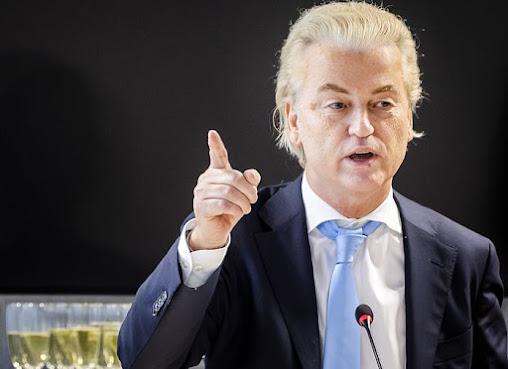
Geert Wilders following the Dutch General Election last November. Photo Credit: Remko de Waal/AFP/Getty Images.     F ellow centre-lef...